 NEW GAME
ChessStrategy·Free to play
 Free-Games.toSign inSurprise me
Outflank opposing discs and finish with the most discs on an eight-by-eight board.
Sign in to save your scores and play history, or keep playing as a guest. Recent game activity and scores appear on the homepage with a masked email or IP address.
 Reversi
Tap a marked square: place a disc and flip captured lines · Opponent selector: computer or same-device two players · Level selector: easy, normal or hard computer · Undo: take back your last move
The board begins with four center discs. Black plays first. Dots identify your legal moves.
A move must trap one or more consecutive opposing discs between your new disc and another of your discs. Every trapped line flips, including diagonal lines.
If a player has no legal move, their turn passes automatically. The game ends when neither side can move, even if empty squares remain. The most discs wins.
This Reversi game is built for Free Games. Read about controls and local storage.
Reversi’s built-in board handles turns for you. For a separate board game that needs agreed time limits, the Chess Clock supplies two timers with configurable increment; it does not provide a board.
Reversi is played on an 8 by 8 board with discs that are black on one side and white on the other. Every disc you trap flips to your colour, so a player can hold most of the board and lose it all in four moves.
The game starts with four discs in the centre and Black to play. A legal move must sandwich at least one unbroken line of your opponent's discs between the disc you place and another of yours, and every trapped line flips, including diagonals. If you have no legal move, your turn passes automatically. The game ends when neither side can move, which sometimes happens with empty squares still on the board, and the player with more discs wins.
The counter-intuitive part is that flipping the most discs is usually the worst move. Discs you flip early are discs your opponent can flip back, and a big early lead often leaves you with almost no legal moves later. Corners are the exception: once a corner is yours it can never be flipped, which is the heart of the Reversi strategy guide. Play the computer, which looks several plies ahead and values mobility as well as discs, or choose 2 players. For a game where pieces keep their loyalty, try chess.
| Genre | Board Strategy Games |
|---|---|
| Challenge | Two-minute rules, lifetime of subtlety |
| Pace | Around ten minutes a game |
| Original era | 1883 in England, relaunched as Othello in 1971 |
| Players | Two players on one device, or against the computer |
| Controls | Tap a marked square, Opponent selector, Level selector, Undo |
| Cost | Free, with no account and no download |
Reversi appeared in England in 1883, and two men claimed it: Lewis Waterman and John W. Mollett, each accusing the other of copying. Their dispute ran in the games press of the day and was never settled. What is certain is that the London firm Jaques and Son was selling Reversi sets by 1888 and the game reached Germany soon after.
The modern form comes from Japan. Goro Hasegawa published the game as Othello in 1971 through Tsukuda Original, fixing the starting position to the four centre discs and standardising the green board. The name is a nod to Shakespeare's play, with its black and white characters in constant reversal. Othello sold in the millions and is now the tournament standard, governed by the World Othello Championship, first held in 1977.
Computers reached the top of the game early. In 1997 the program Logistello beat the reigning world champion Takeshi Murakami six games to nil, and no human has been competitive with the best engines since. More boards of this depth sit in the strategy collection.
A move is only legal if it traps at least one unbroken line of opposing discs between your new disc and a disc you already own. An empty square that traps nothing is not a move. The board marks your legal squares with dots.
Your turn passes automatically and your opponent goes again. This is normal and can repeat. The game finishes only when neither player has a legal move, which occasionally leaves empty squares on a finished board.
Because discs are borrowed, not owned. Holding a big majority in the middlegame usually means your discs are exposed on many lines and your opponent has quiet moves available. The last dozen moves regularly swing thirty discs or more.
Yes. A corner has no square beyond it on any line, so a corner disc can never be flipped for the rest of the game. It also anchors the edges next to it. Most decided games turn on who took the corners.
They are the squares next to a corner: the diagonal neighbour is the X square and the two edge neighbours are C squares. Playing them early usually gives your opponent the corner, so experienced players avoid them until the corner is settled.
It searches several moves ahead and weighs corners, edges and how many replies each side would have, rather than just counting discs. It is a solid club-level sparring partner and will punish an early grab for material.
Nearly. Othello is the 1971 Japanese standardisation of the 1883 English game, and the only real difference is the fixed starting position. The rules of play are identical, and our board follows the Othello standard.
Four games from the same shelf, each with its own pace. The one-line summaries are how their own pages describe them.
| Game | What it is like | Pace | Play |
|---|---|---|---|
| Chess | Checkmate the opposing king in a full game of chess against the computer or a friend. | Twenty minutes to an unhurried afternoon | Play |
| Connect Four | Drop discs into a seven-column board and make a line of four before your opponent. | Three to six minutes a game | Play |
| Chess Clock | Time a game on your own chessboard with two configurable countdown clocks. | Whatever you set, from 1 to 180 minutes | Play |
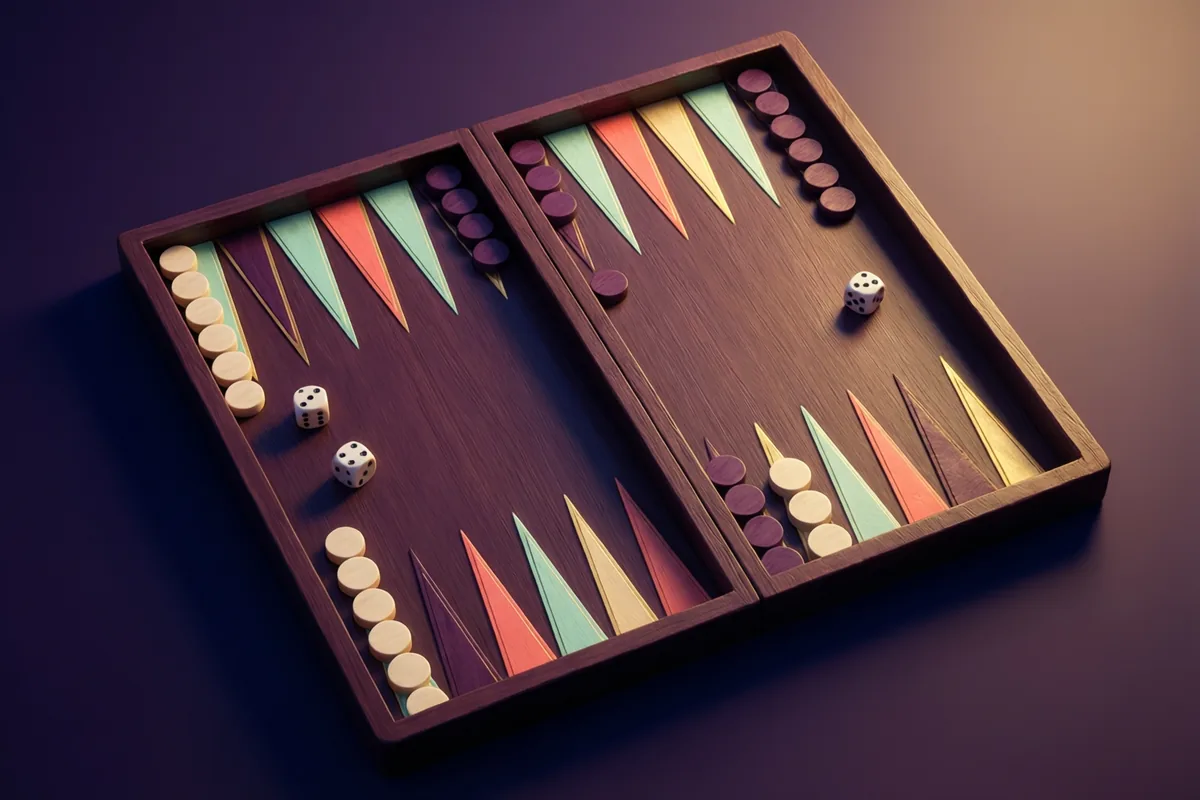
| Backgammon | Move all fifteen checkers into your home board and bear them off before your opponent. | Ten to twenty minutes for one game | Play |
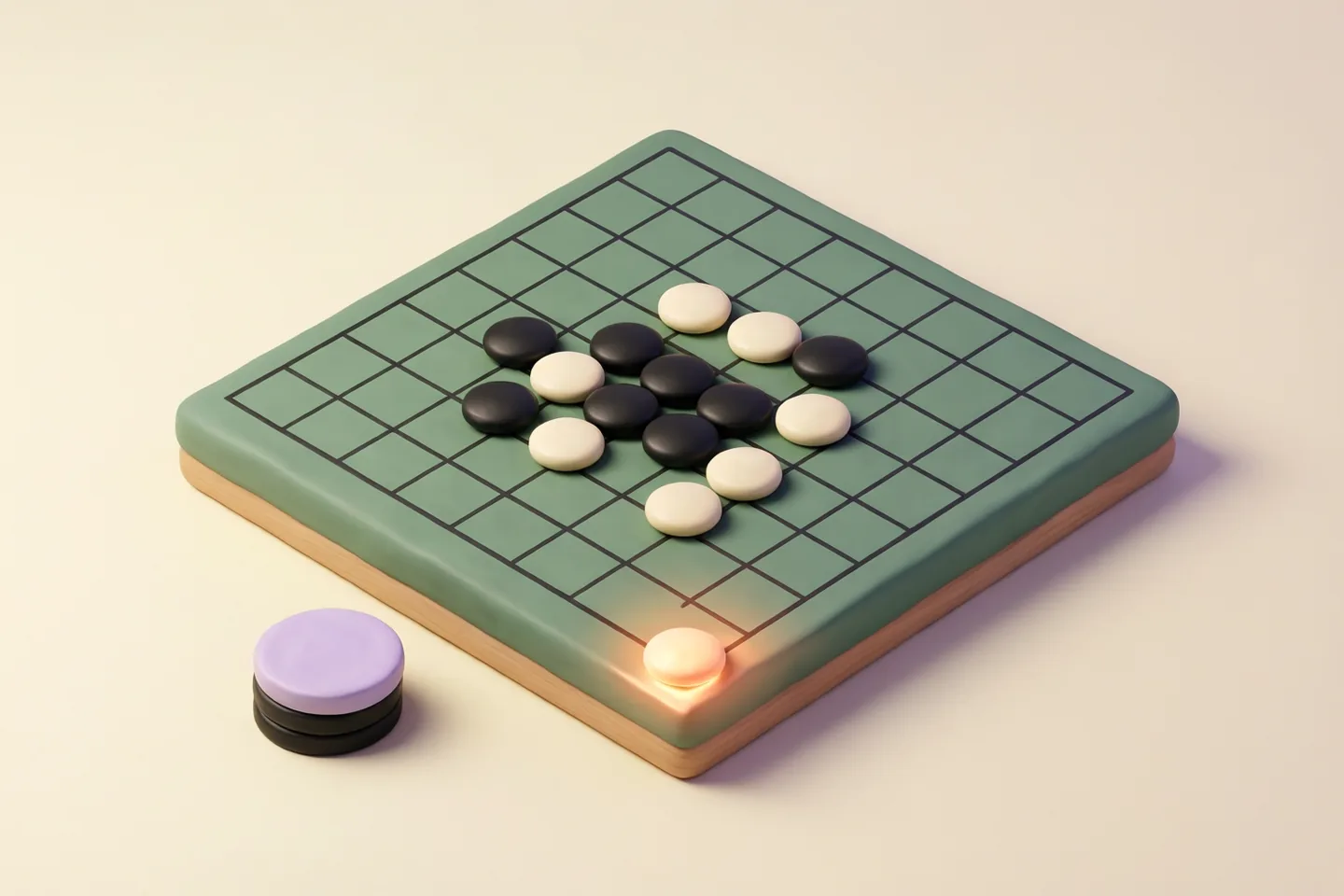
Learn why legal moves and secure corners matter more than an early disc lead.
NEW GAME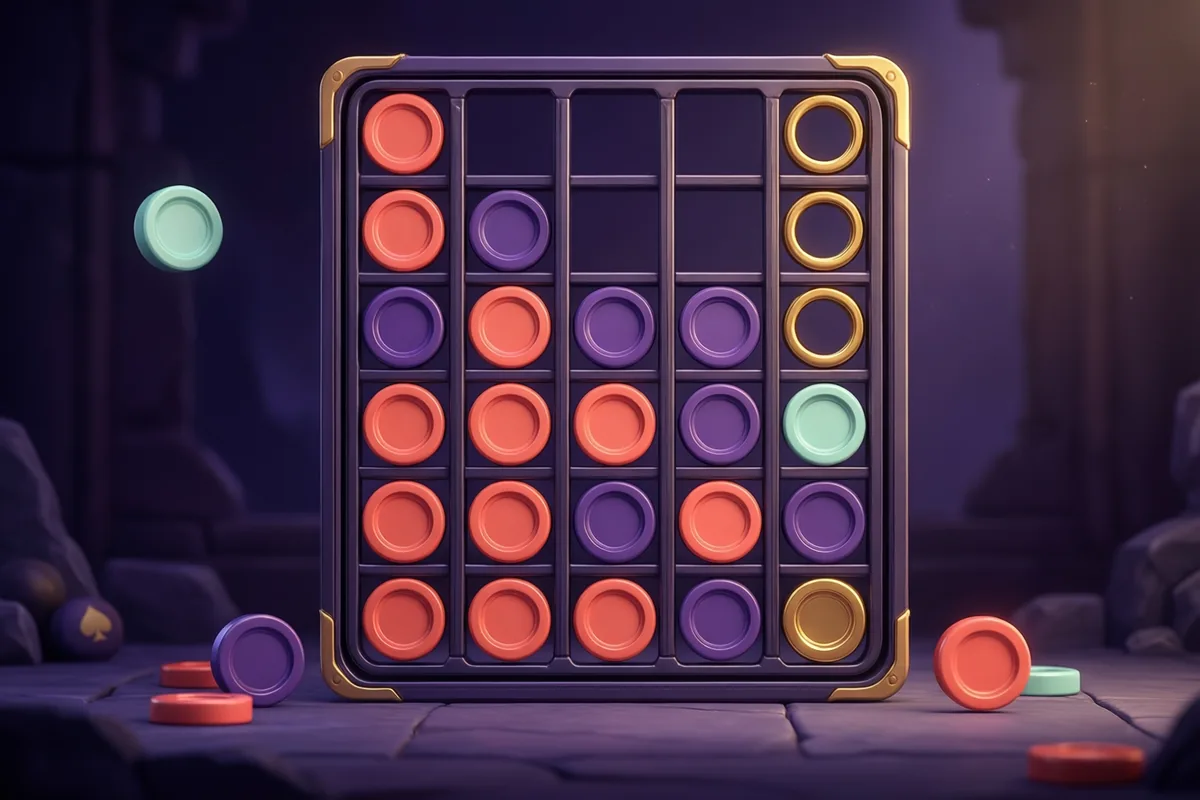 NEW GAME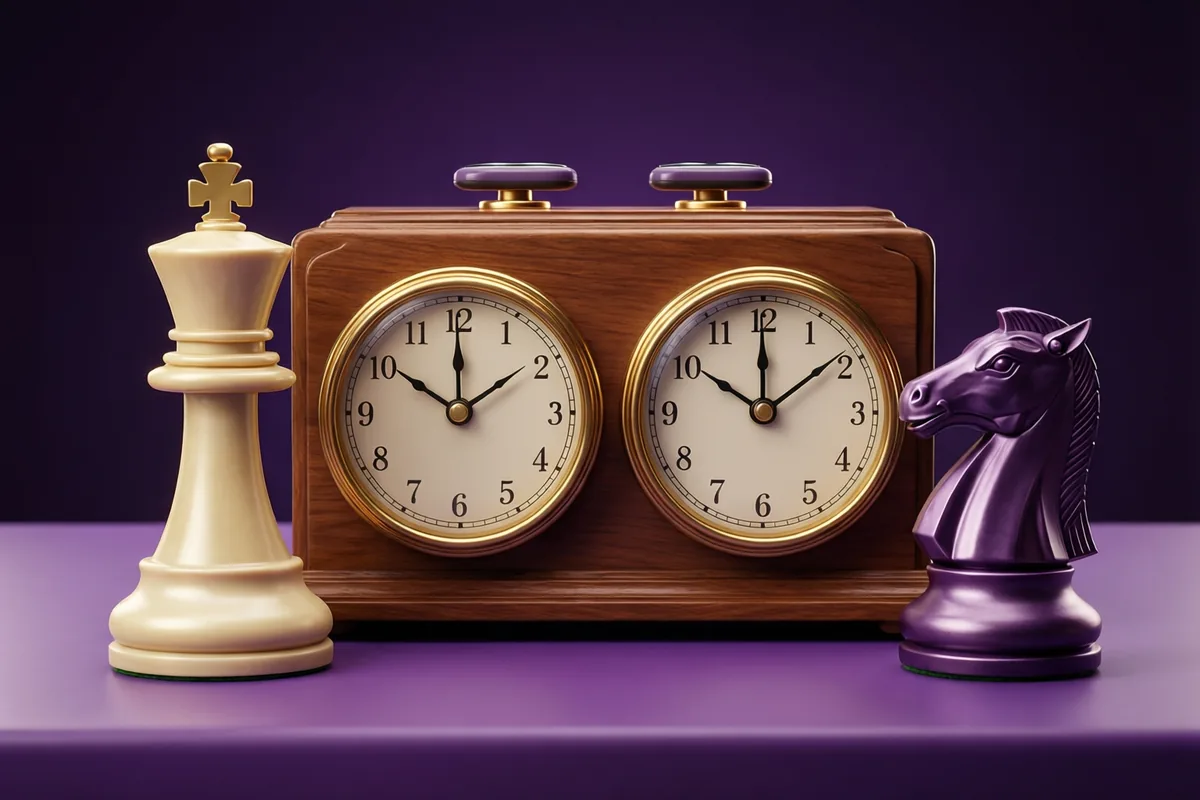
 NEW GAME
Shortcuts