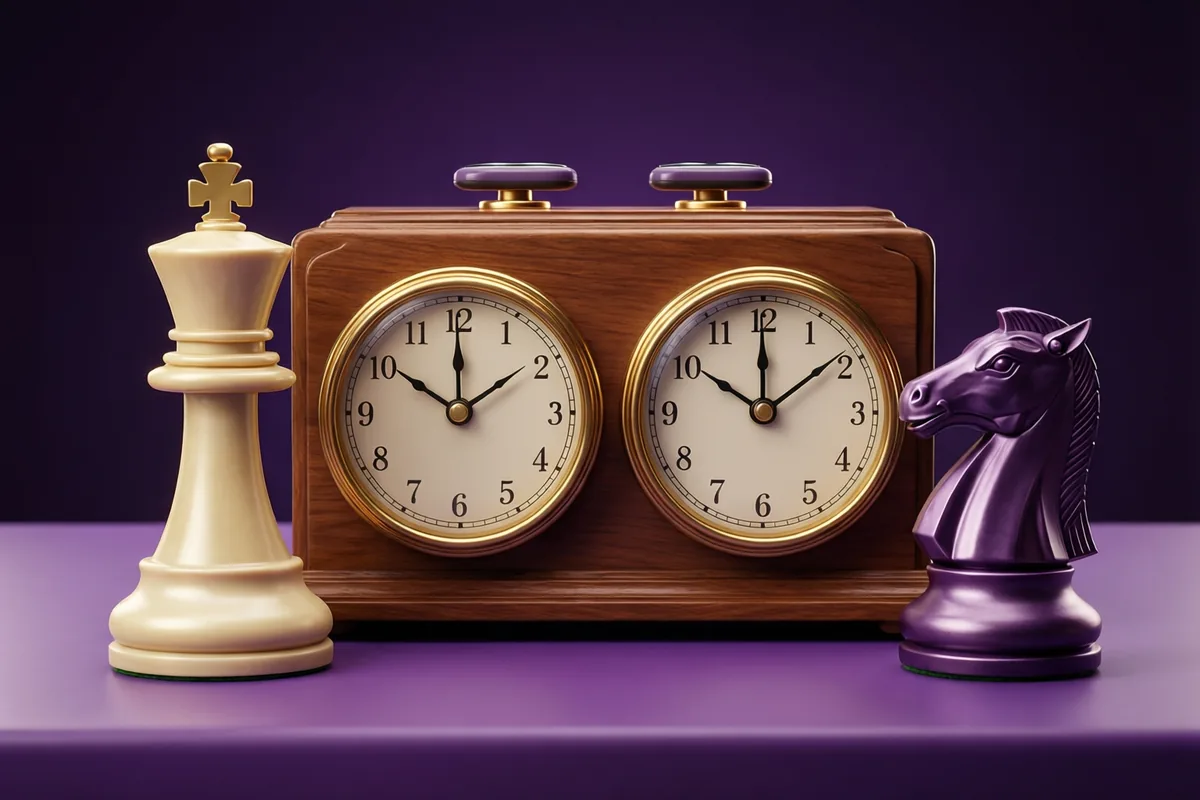
Chess ClockTiming tool·Free to use
 Free-Games.toSign inSurprise me
Move all fifteen checkers into your home board and bear them off before your opponent.
Sign in to save your scores and play history, or keep playing as a guest. Recent game activity and scores appear on the homepage with a masked email or IP address.
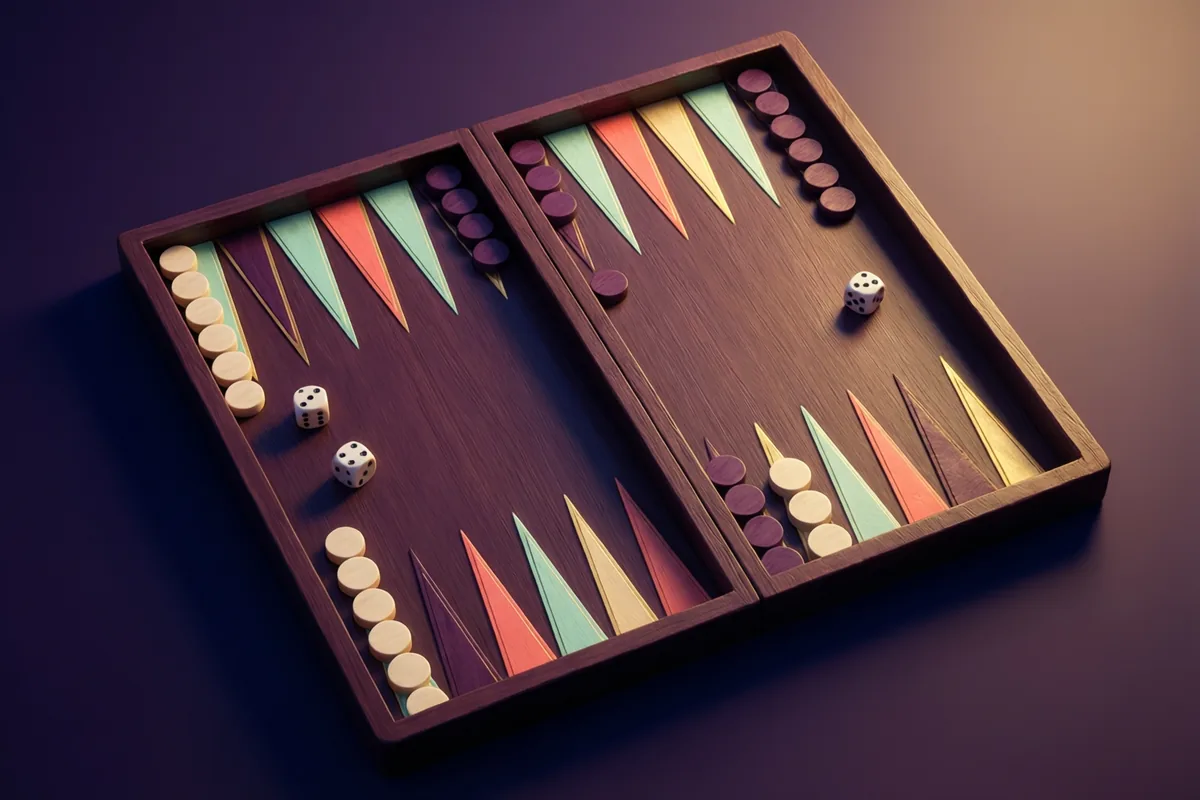 Backgammon
Violet moves from point 24 toward point 1; Orange moves in the opposite direction. Tap a checker and a highlighted destination. Each die is a separate move; doubles give four moves.
A point with two opposing checkers is closed. Landing on one opposing checker sends it to the bar. Bar checkers must re-enter before other checkers move. Use both dice when possible, and the higher die if only one can be used.
Once all your checkers are in your six-point home board, use an exact roll to bear off, or a larger roll for your furthest checker. First to remove all fifteen wins. This is a single game without a doubling cube.
This Backgammon game is built for Free Games. Read about controls and local storage.
A safe point protects a Backgammon checker from being hit. Compare that with Chess, where protection depends on attacks by individual pieces.
Mancala is another ancient race of counted moves; the how Mancala sowing and extra turns work shows how the landing spot of the last stone can earn an extra turn.
Backgammon is a race with teeth. Each player has fifteen checkers travelling around 24 points in opposite directions, and the first to bring all fifteen home and bear them off wins. Violet runs from point 24 down toward point 1, Orange runs the other way.
Dice decide what you can do, not what you should do. Two dice give two moves, one of each number, played with one checker or two. A double gives four moves of that number. If only one die can be played, play the higher one.
Safety is the real subject. A point holding two or more of your checkers is closed, and your opponent cannot land there. A point holding one checker is a blot: land on it and that checker goes to the bar, and it must re-enter in your opponent's home board before any other checker of yours moves. A hit can cost someone twenty pips.
Once all fifteen of your checkers are inside your six-point home board, you start bearing off with exact rolls, or a larger roll for your furthest checker. This edition plays a single game with no doubling cube. If you want the same board game depth with no dice at all, try chess, and the board game strategy guide compares the two.
| Genre | Board Strategy Games |
|---|---|
| Challenge | Luck each roll, skill over a session |
| Pace | Ten to twenty minutes for one game |
| Original era | Ancestors around 3000 BCE, modern rules from the 1920s |
| Players | Two players on one device, or against the computer |
| Controls | Tap / click / Enter, New game |
| Cost | Free, with no account and no download |
Backgammon belongs to the oldest family of board games we know of. The Royal Game of Ur, played in Mesopotamia around 2600 BCE, and the boards found at Shahr-e Sukhteh in Iran of similar age both use dice to race pieces along a track. Whether they are direct ancestors or cousins is debated; what is certain is that dice-racing games are roughly five thousand years old.
The Romans played tabula, a game so close to modern backgammon that Emperor Zeno's unlucky roll in a game around 480 CE is still readable as a backgammon position. In medieval England the game was called tables and was popular enough to be banned repeatedly for encouraging gambling.
The name backgammon appears in English around 1645. The last major change came in the 1920s in New York, when an unknown player introduced the doubling cube, which lets a player offer to double the stake before rolling. That one invention turned the game into a study of probability and turned it into a serious gambling game. Other classics with this much history live in the Reversi tradition too.
Fifteen. They start spread across four points, and every one of them must reach your six-point home board before you may begin bearing off. First player to remove all fifteen from the board wins the game.
You play that number four times instead of twice. A double six gives you four moves of six pips each, and you may spread them across any of your checkers. Doubles are the biggest single swing of luck in the game.
The bar is where a hit checker waits. Landing on a point holding exactly one opposing checker sends it there. A checker on the bar must re-enter in the opponent's home board on a matching roll, and none of your other checkers may move until it does.
Because your opponent has two or more checkers on it, which closes it. You can pass over a closed point on the way to somewhere else, but you cannot finish a move there. This is why making points is the core defensive idea.
Once all fifteen of your checkers sit in your home board, a roll of four removes a checker from the four point. If no checker sits on that point and none sits higher, the roll takes your furthest checker instead. An exact roll is always allowed.
No. This is a single game with no cube and no stake, so there is nothing to accept or decline. If you play with a physical set and want cube play, agree the rules before the first roll.
Both, on different timescales. A single game can be decided by one lucky double, which is why beginners sometimes beat experts. Over a long match the better player wins clearly, because skill lies in choosing between the moves each roll allows.
Four games from the same shelf, each with its own pace. The one-line summaries are how their own pages describe them.
| Game | What it is like | Pace | Play |
|---|---|---|---|
| Chess Clock | Time a game on your own chessboard with two configurable countdown clocks. | Whatever you set, from 1 to 180 minutes | Play |
| Chess | Checkmate the opposing king in a full game of chess against the computer or a friend. | Twenty minutes to an unhurried afternoon | Play |
| Reversi | Outflank opposing discs and finish with the most discs on an eight-by-eight board. | Around ten minutes a game | Play |
Gravity, forced captures, extra turns and legal replies change what “think ahead” means on each board.
 NEW GAME
 NEW GAME
Shortcuts