Browser skill games: practice the next move.
Choose a repeatable visual reference for each action. In Night Driver, read the white roadside posts ahead, steer gently and brake before tight bends; the score is distance covered in 90 seconds.
Identify the decision you are practicing
Name the decision before you practise. Stacker asks you to time a visible crossing, Reaction Time Test asks you to respond to a new signal, and Night Driver asks you to correct a path you are already on.
| Game | The decision | What the result measures |
|---|---|---|
| Stacker | Anticipate a moving block | How much of the block overlapped the stack |
| Reaction Time Test | Respond to the DRAW signal | Your response over ten rounds |
| Night Driver | Correct a continuous path | Distance covered in 90 active seconds |
Keep the three records separate
A run of ten reaction rounds, a Stacker height and a Night Driver distance measure three different things. Compare each one only with your own earlier attempts on the same device.
A better result in one is not a measured improvement in the others.
Use the overlap in Stacker as feedback
A Stacker drop keeps only the part of the moving block that overlaps the stack underneath. The overhang is cut away.
Read which edge was trimmed
Compare the lost edge with the direction of travel. If a right-moving block loses its right edge, you dropped after it passed alignment.
Width carries forward
The next block inherits the surviving width. Small repeated errors shrink the space you have for later drops, so a near-perfect placement is worth more than it looks.
Missing entirely ends the run
There is no partial credit for a block that lands clear of the stack. Once the surviving width is one block, treat the next drop as the whole game.
Separate reaction from anticipation
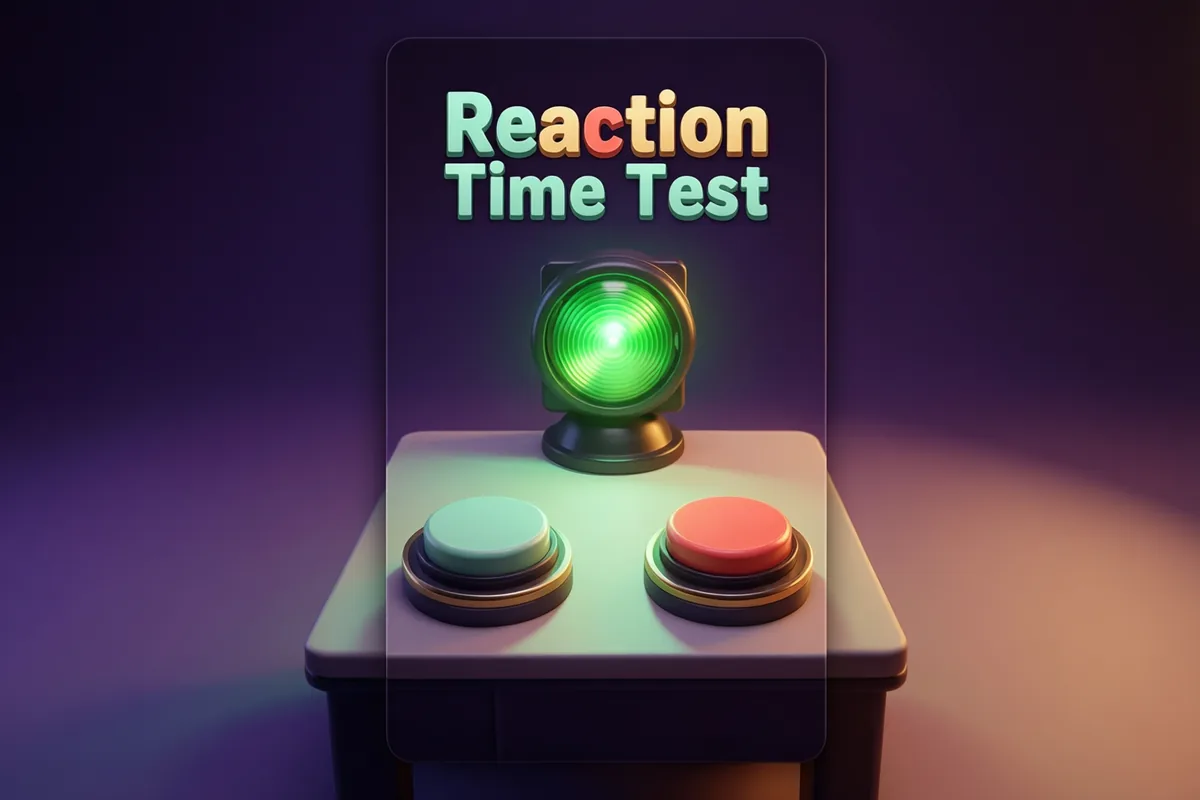
In Reaction Time Test, wait for the actual DRAW signal rather than guessing when the delay should end. A premature tap loses that round. The game runs ten rounds against a machine opponent, and the displayed response is affected by browser and input timing. Compare attempts on the same device if you want a useful personal reference. It is an arcade result, not a clinical assessment or a verified comparison with people using other hardware.
Read the road in Night Driver
Read Night Driver by its white roadside posts, which show the bend before you reach it.
- The car accelerates on its own, so Down or the touch brake is your only way to slow.
- Entering the verge slows you, so a short cut through a tight bend costs time when it repeats.
- Make small corrections near the car while reading the curve ahead.
- The round lasts 90 active seconds and scores distance.
Braking is a steering decision
Because the car accelerates on its own, the brake is how you buy time to line up a bend. A short brake before the curve usually costs less than a long recovery after leaving the road.
Steady progress beats a fast straight followed by a long recovery.
Choose feedback that explains the result
Record what went wrong, not just the total, because each of these games gives a different kind of evidence.
- Stacker: note whether the drop was early or late, and which edge was lost.
- Night Driver: note the bend where you left the road, and whether braking earlier kept you between the posts.
- Reaction Time Test: separate a legal slow response from a false start.
Write the cause, not the number
A note that says late, right edge trimmed tells you what to change next time. A note that says the score does not.
Each record points at an action you can change. Counting only the total score hides that information.
Read a physical result before dropping again
Super Stacker 2 checks whether a completed arrangement stays balanced for five seconds. Dropping the next shape too high can disturb a stable lower layer. Infinite Plinko instead gives points after a ball reaches a pocket; it uses pretend points and has no cash value. Disgyn Dewi counts the people touched during a drop and applies a landing multiplier. A similar falling motion can therefore reward a stable structure, a destination, or a route through several contacts.
Choose a solo run or a simultaneous duel
Neon Drift asks you to keep a car on a curving road as it gains speed. XMAS Wheelie uses one held control to raise a front wheel and a release to let it fall. Flapsanity gives two people separate flap controls on the same device, with the first collision ending the duel. Agree on a shared start before a two-player round, and use Focus view to keep the playfield and touch controls together.
Switch the skill you are practicing
Open Simon for a playable example from this collection, then continue with the board game strategy guide. Browse the browser skill games collection as more games are added to the public library.
Questions about browser skill games
Can I actually train my reaction time?
You can get better at these specific games, and that is all a browser round measures. The Reaction Time Test runs ten rounds and reports your response, but the number includes your browser and input hardware. Treat it as an arcade result on one device, not as a measurement of you.
Why is my timing worse on some days?
Tiredness, a different device and a different input method all change the result, and so does the game speeding up. Stacker slides its blocks faster as you climb, so a drop that was comfortable low down is not the same task higher up. Compare attempts made on the same device before concluding anything about yourself.
Does practising one skill game help with the others?
Not much, because they train different decisions. Stacker asks you to anticipate a moving block, the Reaction Time Test asks you to respond to a new signal, and Night Driver asks you to correct a path you are already on. A better result in one is not evidence of improvement in the others.
Is a keyboard better than a touchscreen for timing games?
Neither is reliably better, and the difference is smaller than the difference between two sessions on the same device. What matters is consistency, so pick one input and stay with it while you are comparing attempts. Switching input halfway through a set makes your own results impossible to read.
These tips refer to the editions in our library. Game controls and behavior can differ elsewhere. Spotted a problem?