2048 corner strategy: give your biggest tile a home.
Keep your largest tile near a corner, arrange supporting tiles toward it, and preserve empty spaces for new tiles. A corner is a useful organizing habit, not a guarantee of winning; check the board before every move.
Start with a stable corner
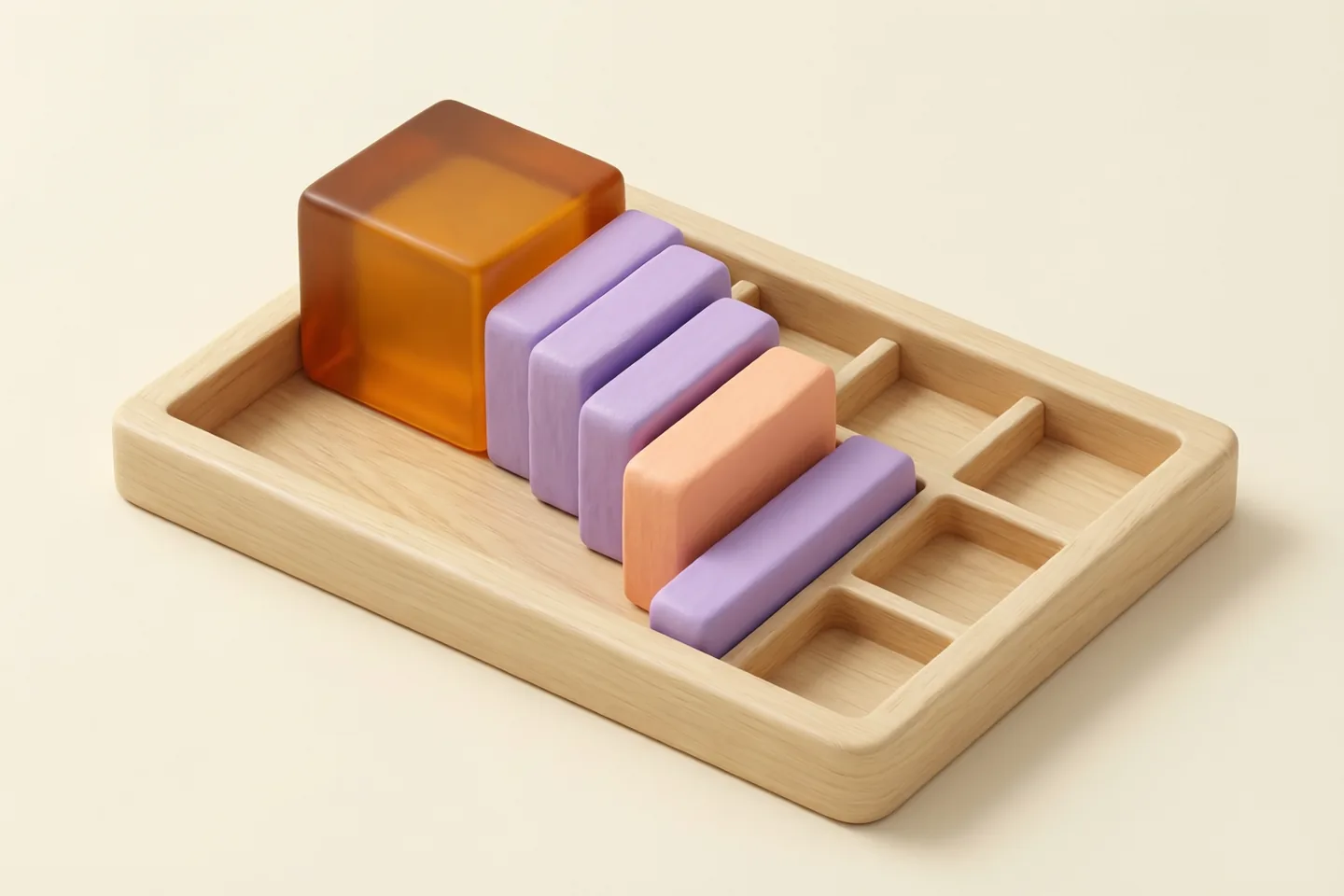
Pick one corner for your largest tile and keep the biggest values next to each other, so future merges feed toward that corner.
It is an organising habit, not a formula
You are arranging the board so merges line up. No fixed sequence of directions wins 2048 on its own.
Space is part of every decision
A new tile appears after any move that changes the board. A plan that fills the grid leaves you no room to correct a bad tile.
Why one corner and not two
Two half-built corners compete for the same tiles and neither one finishes. Choosing a single corner gives every merge the same destination.
Build a descending edge
Build one edge in descending order, such as 128, 64, 32, 16, so the values already sit in the order they will merge.
- Feed smaller values toward the open end of that row.
- With the largest tile in the bottom-left, left and down moves tend to preserve it.
- A small tile trapped between two larger ones stops the chain until it is merged away.
- Check the whole board first, because one move slides every row at once.
Feed from the open end
Small tiles should arrive at the far end of the row and travel toward the anchor. A small tile that arrives in the middle is what splits a chain.
A full anchor row protects the pattern
A full anchor row keeps the largest tile in place, because a sideways move cannot slide it anywhere when there is no gap to slide into.
Check what will actually shift
Before moving in a less familiar direction, work out which tiles have somewhere to go. A tile moves only when it has an empty cell or an equal neighbour in that direction.
Points now are not always progress
A small merge that breaks a long chain can cost more than it scores. The score does not measure how good the position is.
Rebuild rather than refuse
When the only legal move breaks your row, take it and plan the repair. Refusing a direction is a training habit, not a rule, and a full board ends the game either way.
Use exceptions thoughtfully
Never moving in one direction is a training habit, not an absolute rule. Sometimes the only legal move disrupts your preferred structure. Choose the move that leaves the best chance to rebuild rather than refusing to use it. A useful recovery keeps several empty cells and a path for smaller tiles to reach their matches.
Practice with a specific target
Try reaching 256 while keeping the largest tile in the same corner. Then aim for 512 with an ordered edge. When a run ends, identify when a small tile became trapped between larger values. This review is more useful than counting restarts. The Play 2048 link takes you directly to the version described here.
Work through one left move
A tile created by a merge cannot merge again during the same 2048 move. Gaps close before equal neighbors combine.
| Starting row | Row after moving left |
|---|---|
| 2, 2, 4, 0 | 4, 4, 0, 0 |
| 4, 0, 4, 8 | 8, 8, 0, 0 |
Here, 0 means an empty cell. The first row does not become 8 in that move. A different value between two equal tiles would prevent that pair from meeting. Inspect the row before expecting a corner plan to produce successive merges at once.
Compare a corner plan with a forced change
A corner is a useful organizing choice, not a rule that overrides the legal moves. These full boards separate the slide from the random tile that follows it. Rows are numbered from the top; 0 means empty.
| Row | A | B | C | D |
|---|---|---|---|---|
| 1 | 0 | 0 | 2 | 2 |
| 2 | 0 | 0 | 0 | 0 |
| 3 | 0 | 0 | 0 | 0 |
| 4 | 16 | 8 | 4 | 2 |
| Row | A | B | C | D |
|---|---|---|---|---|
| 1 | 4 | 0 | 0 | 0 |
| 2 | 0 | 0 | 0 | 0 |
| 3 | 0 | 0 | 0 | 0 |
| 4 | 16 | 8 | 4 | 2 |
| Row | A | B | C | D |
|---|---|---|---|---|
| 1 | 0 | 0 | 0 | 0 |
| 2 | 0 | 0 | 0 | 0 |
| 3 | 0 | 0 | 0 | 0 |
| 4 | 128 | 64 | 32 | 16 |
| Row | A | B | C | D |
|---|---|---|---|---|
| 1 | 128 | 64 | 32 | 16 |
| 2 | 0 | 0 | 0 | 0 |
| 3 | 0 | 0 | 0 | 0 |
| 4 | 0 | 0 | 0 | 0 |
In the first pair, the top-row 2s merge into 4 while the bottom row stays ordered. In the recovery pair, only Up changes the board: the other three directions are no-ops. Moving up opens space but abandons the lower-left anchor. Inspect the new random tile before choosing the next move; neither diagram predicts its location.
Test the plan, then review it
Open Concentration for a playable example from this collection, then continue with the Sudoku beginner guide. Browse the puzzle games collection as more games are added to the public library.
Questions about 2048 corner strategy
Can you actually win 2048, or does it just end?
You win by making a 2048 tile, and the game says so when you do. It then keeps going, so you can carry on toward 4096 and beyond on the same board. The run ends only when no move changes anything.
Is 2048 luck or skill?
Both, in a fixed proportion. Every new tile is a 2 nine times out of ten and a 4 the other time, and its position is random, so you never control the input. You control every slide, which is where the corner plan and the order of your edge come from.
Why did my board fill up so suddenly?
Because a slide that merges nothing still adds a new tile. Once your largest values sit out of order, most moves shuffle tiles without combining them, and the free cells disappear a couple at a time. Watch the empty-cell count rather than the score to see this coming.
Should I use Undo every time I make a bad move?
You can only undo the last successful move, and another undo becomes available after your next one, so save it for a move you want to study. Make the move, look at the new board, then undo and compare the empty cells and the order of your edge. Used that way it is a comparison tool rather than a safety net.
What should I aim for once I have reached 2048?
Keep the same corner discipline and go for 4096. The board does not change or reward you differently, so the only new problem is that your anchor row is now made of much larger values and takes far longer to rebuild if it breaks. Most runs end because a big tile was allowed to leave its corner once.
These tips refer to the editions in our library. Game controls and behavior can differ elsewhere. Spotted a problem?