
Dinosaur GameRunning·Free to play
 Free-Games.toSign inSurprise me
Switch lanes, jump and slide through oncoming trains and barriers at full sprint.
Independent browser adaptation · Not an official releaseSign in to save your scores and play history, or keep playing as a guest. Recent game activity and scores appear on the homepage with a masked email or IP address.
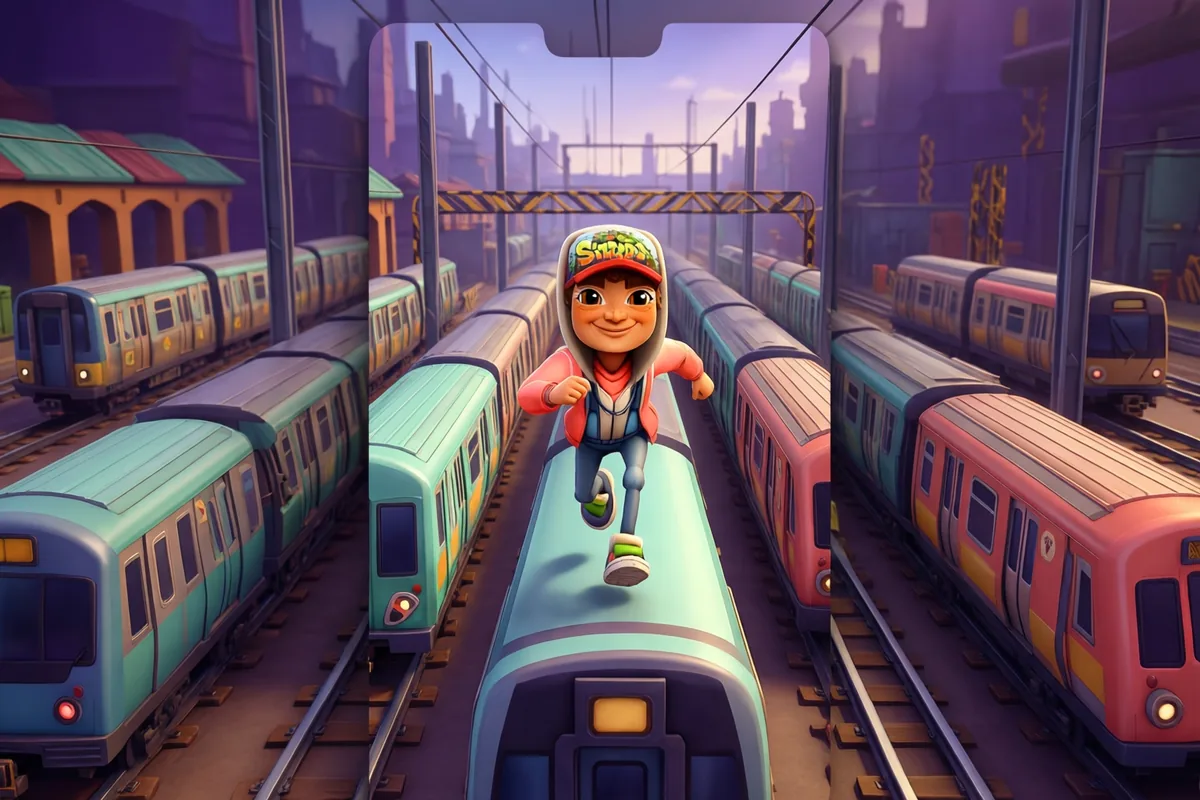 Subway Surfers
Press the left and right arrows - Or swipe sideways - To hop between the three rails. Lane changes are instant, and they are your main dodge, so keep both options in mind at all times.
Press up or swipe up to leap over barriers and low blockers. The jump has a fixed arc, so start it a beat before the obstacle, not on top of it.
Press down or swipe down to slide beneath overhead gantries and half-height gaps. Sliding also cancels a jump early if you need to get back down fast.
Coins add to your score and mark a survivable route - A line of coins never leads directly into a wall. When the screen gets busy, trust the trail.
A train with a yellow ramp on its nose carries you onto the roof, where coin lines wait and nothing can hit you until the last car ends. Glowing pickups on the track give you a coin magnet, double score, super sneakers for a higher jump, or a jetpack that flies over everything for a few seconds.
Trains, barriers and gantries arrive in combinations that repeat. Learn the shapes - Train left, barrier middle, gantry right - And your hands will answer before your brain finishes reading.
This independent browser adaptation uses the original game’s established title. It is not an official publisher release or an original ROM. Its artwork, tuning and controls may differ from other games with similar rules. Guest personal bests stay in this browser. Signed-in players can also save scores and play history to their private dashboard; there is no global leaderboard. Read about controls and local storage.
A clear lane now may contain the next barrier. SkiFree also rewards looking ahead, with trees, rocks and slalom gates replacing the train lanes.
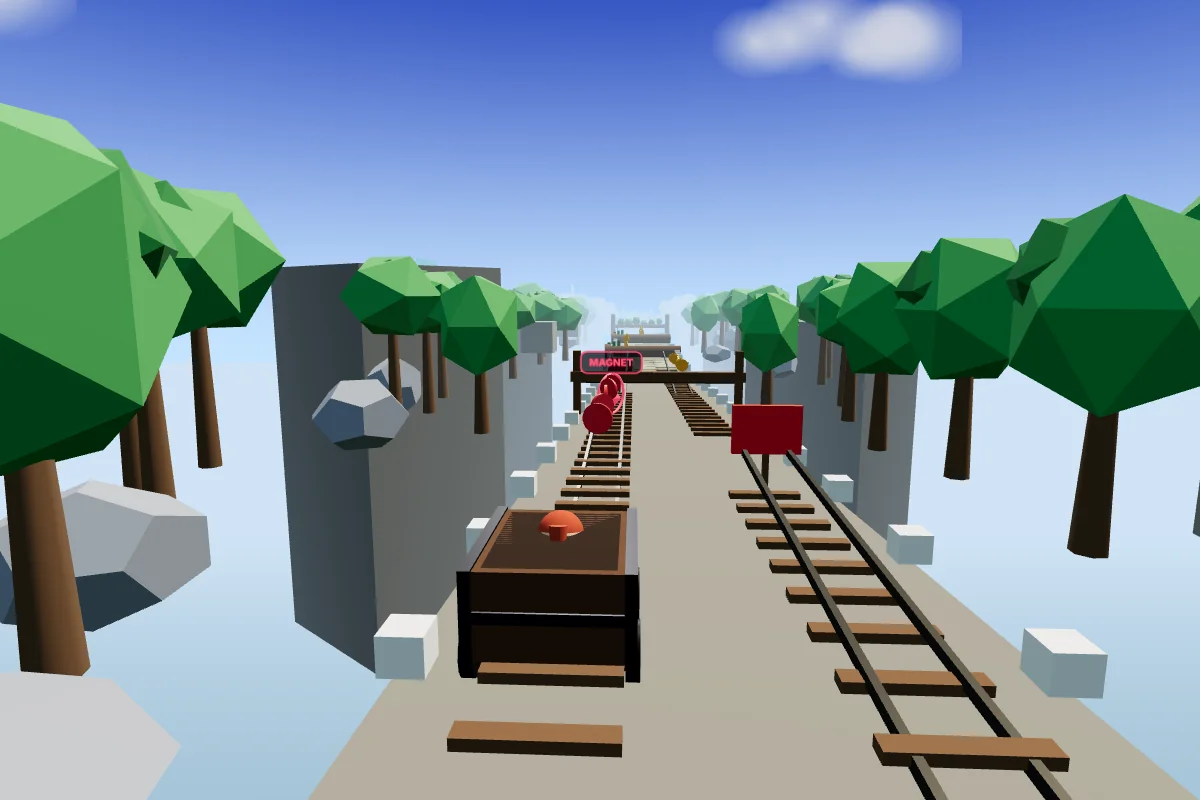
Subway Surfers is a full-sprint lane runner: three parallel rails stretch into a fully 3D horizon, and you are the figure barreling down them with no brake pedal in sight. Trains park on the rails, barriers block them at knee height, and signal gantries hang low enough to demand a slide. Your toolkit is four moves - Step left, step right, jump, slide - and the game's whole job is asking for them faster than you can think. Coins run in tidy lines that double as route hints, because the developer who placed them also placed the train behind them. Every run accelerates until pattern reading replaces reaction time as your survival skill. Our version distills the mobile mega-hits into a browser page: swipe controls that mirror the arrow keys, a coin-boosted distance score, a saved personal best, and a track that lays out new trains and new coin lines on every restart.
| Genre | Running Games |
|---|---|
| Challenge | Pattern reading at speed |
| Pace | The rails only get faster |
| Original era | 2012 (endless runner boom) |
| Players | Single player |
| Controls | ← →, ↑ / Space, ↓, Swipe (mobile) |
| Cost | Free, with no account and no download |
The endless runner existed before 2011 - Canabalt had already proven the one-button sprint in 2009 - But Temple Run gave it a third dimension. Built by the husband-and-wife team Keith Shepherd and Natalia Luckyanova at Imangi Studios, it put the camera behind the runner, split the world into swipe-sized decisions, and became one of the most downloaded mobile games of its era after going free in late 2011.
In 2012, Copenhagen studios Kiloo and SYBO Games answered with Subway Surfers, which formalized the grammar Temple Run had sketched: exactly three lanes, trains as walls, barriers to jump, and coins as breadcrumb navigation. Its bright trainyard and monthly city updates kept it at the top of the download charts for over a decade - In 2022 it became the first mobile game to pass four billion downloads.
The three-lane formula proved to be one of gaming's most portable ideas, spawning branded runners for nearly every franchise on earth. Subway Surfers returns it to the open web, where a run starts in one click - Same three rails, same jump-and-slide grammar, plus a freshly laid track every run so the trains never park in the same place twice.
Sprint as far as you can down the three rails. Distance is your base score, coins add to it, and one clean hit from a train, barrier or gantry ends the run.
Trains block a whole rail and must be dodged sideways. Barriers are low and can be jumped. Gantries hang overhead and must be slid under. Combinations of the three are the real difficulty.
They also work as a guide. Coin lines are laid along survivable routes, so when the track gets chaotic, following the coins is a legitimate navigation strategy.
Almost always timing or airtime. The jump arc is fixed - Jump too early and you land on the obstacle; jump when you needed a lane change and you are locked in the air as the train arrives.
No. The sprint accelerates with distance, which is why long runs shift from reflexes to pattern recognition. Top players are reading shapes, not reacting to surprises.
The 2011-2012 lane-runner boom: Temple Run by Imangi Studios and Subway Surfers by Kiloo and SYBO. Subway Surfers is our browser-native tribute to that three-lane formula.
No. Each sprint lays out fresh obstacles and coin lines, so reading a pattern early beats knowing it in advance. The speed ramp is the one constant.
Brushing a train while changing lanes is a stumble, not a crash: you bounce back to the lane you came from, lose speed for a moment and your coin streak resets. A second hit while you are still stumbling ends the run, and running straight into a train front always does.
Swipe left or right to change rails, swipe up to jump, swipe down to slide - The same four gestures the genre was born with on phones. No buttons needed.
Four games from the same shelf, each with its own pace. The one-line summaries are how their own pages describe them.
| Game | What it is like | Pace | Play |
|---|---|---|---|
| Dinosaur Game | No internet required - Just jump. | Speed creeps up every second | Play |
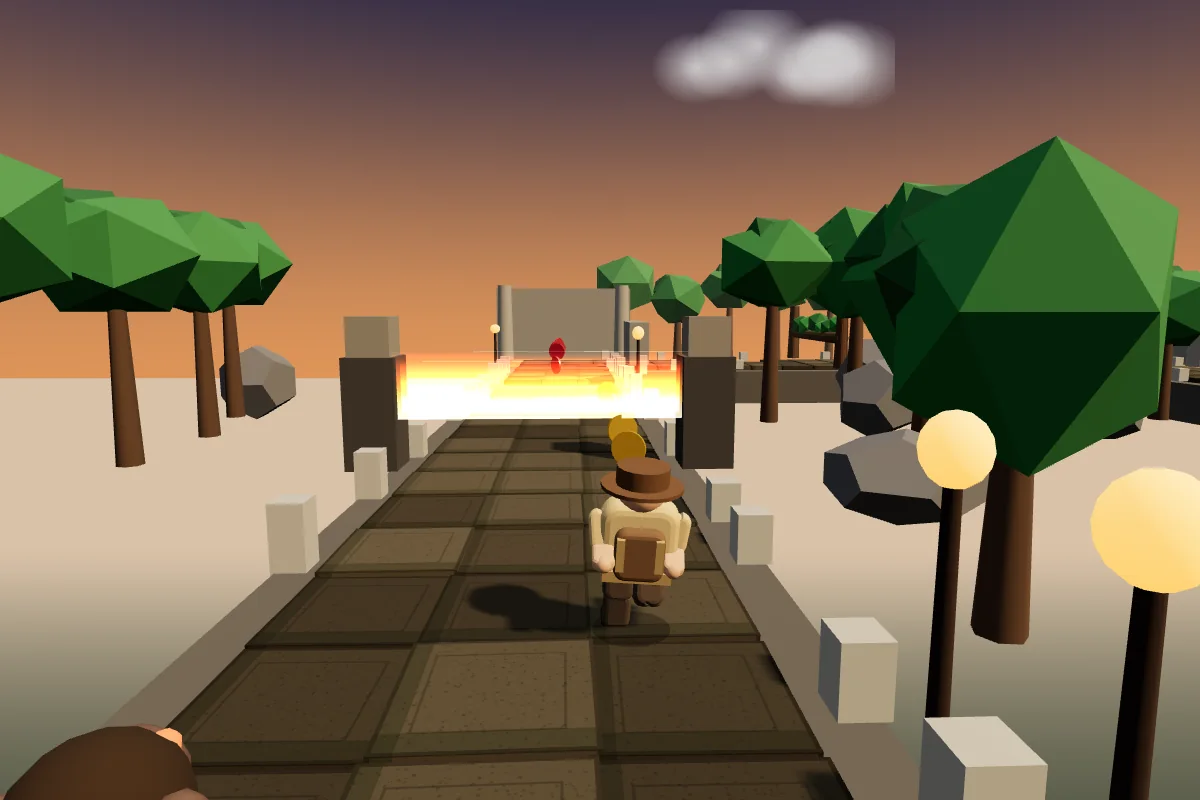
| Temple Run | Turn, jump, slide, and never let the monkeys catch up. | Longer paths, tighter windows | Play |
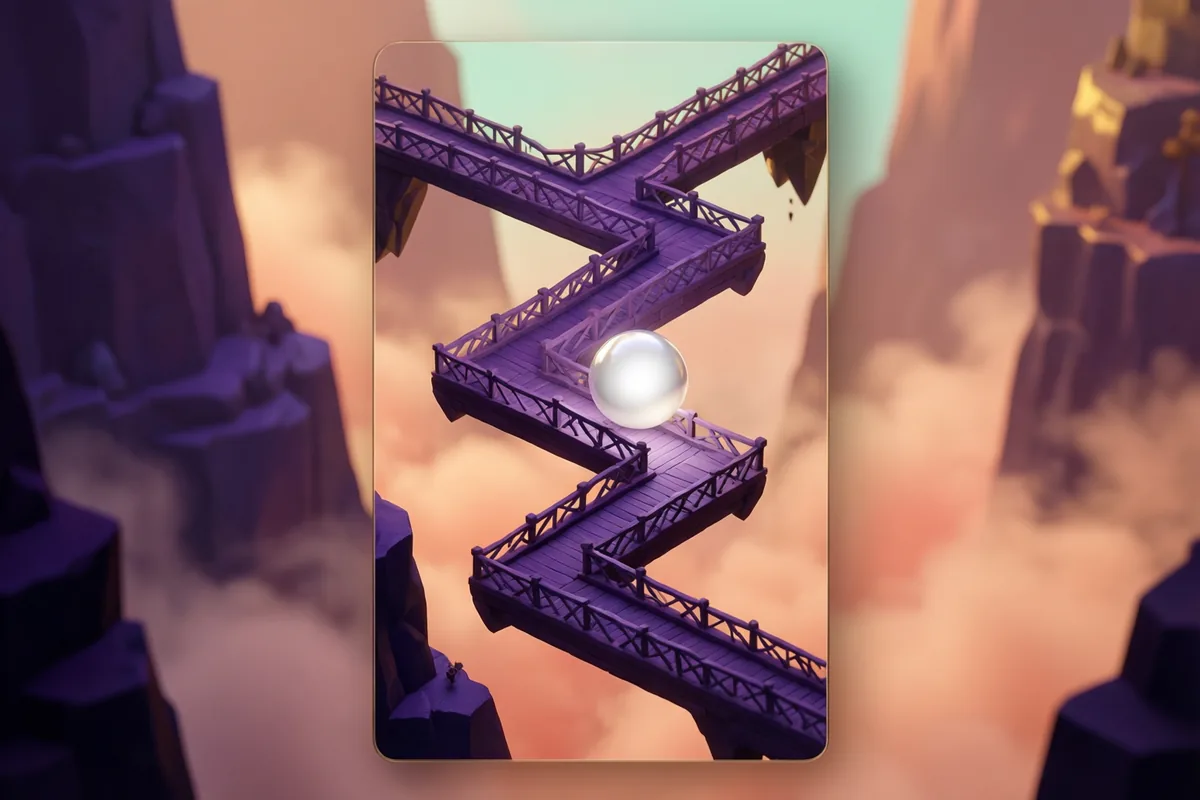
| ZigZag | Left, right, left - The path is thinner than it looks. | Ball accelerates the longer you live | Play |
| Temple Run 2 | Sky ruins, mine carts, zip lines and one very large ape. | Rising, falling and always faster | Play |
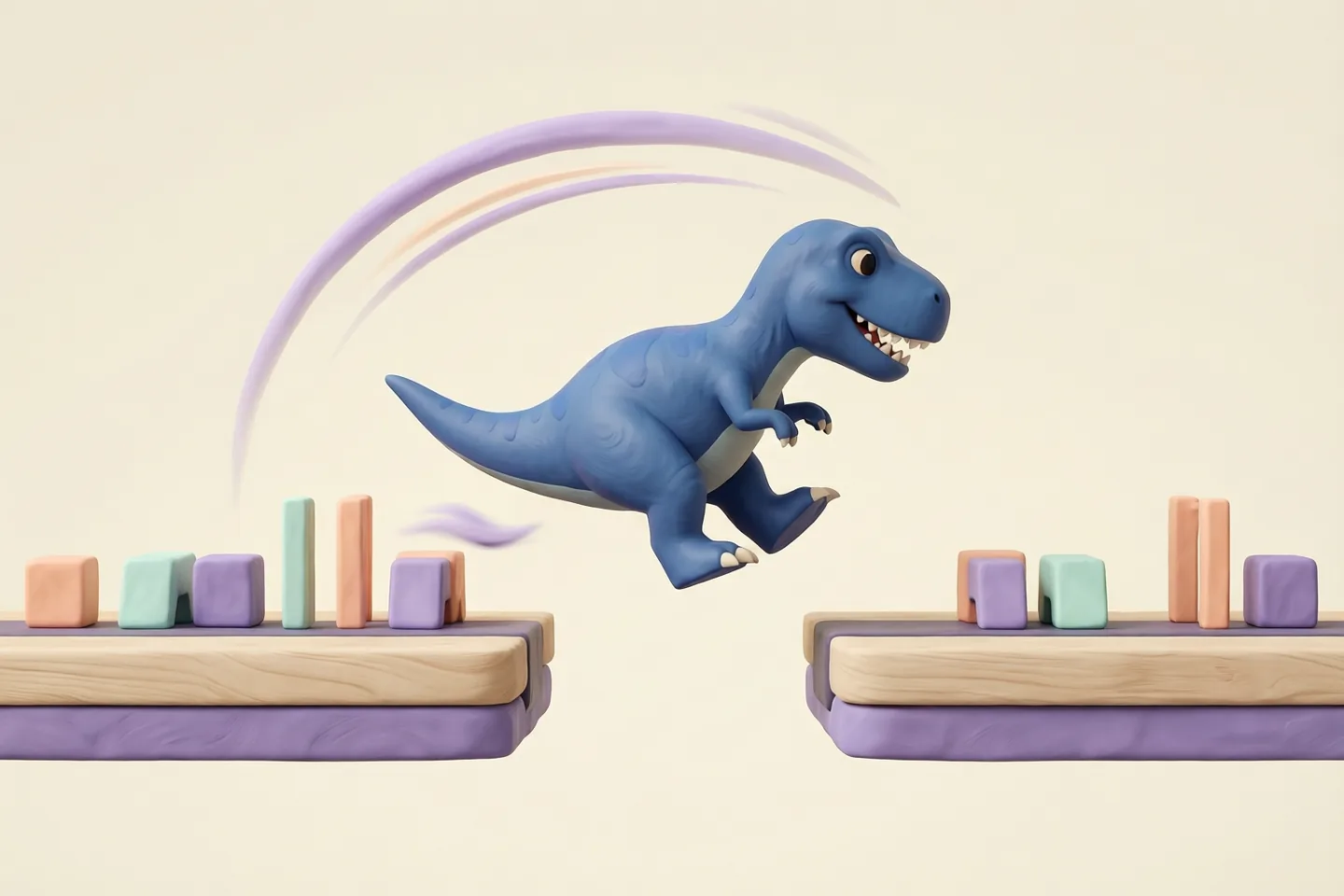
A jump, a flap, a lane change and a corner tap solve four different movement problems.


Shortcuts