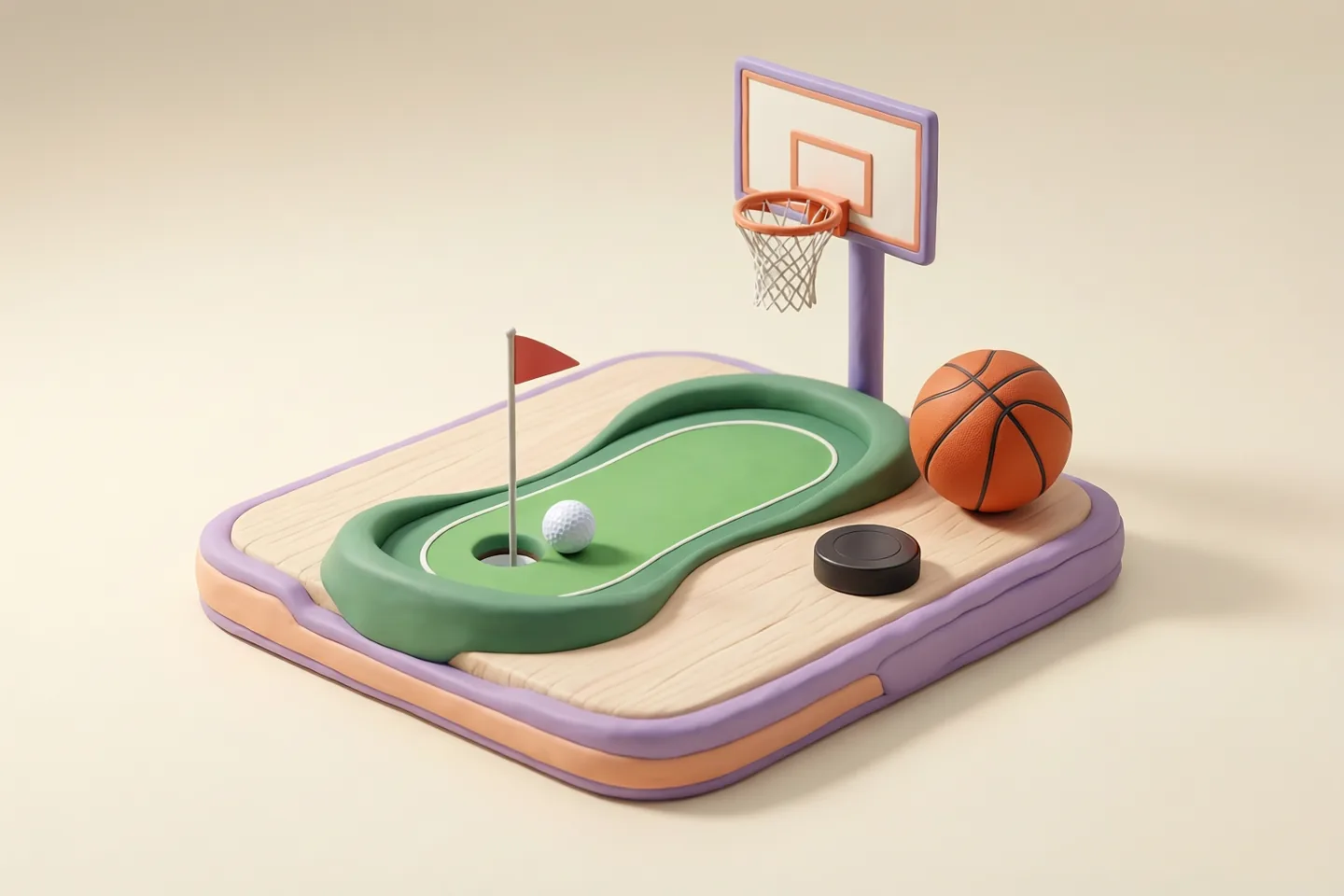
Sports games: aim, practice, repeat.
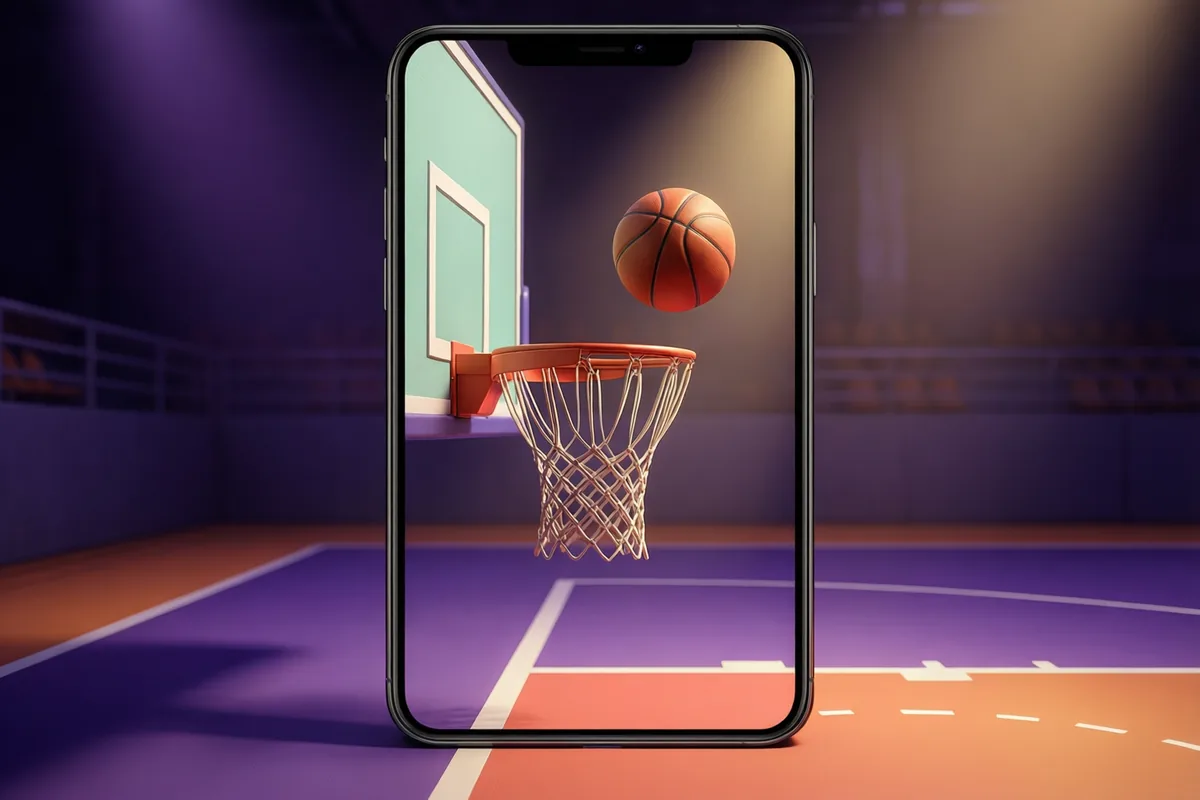
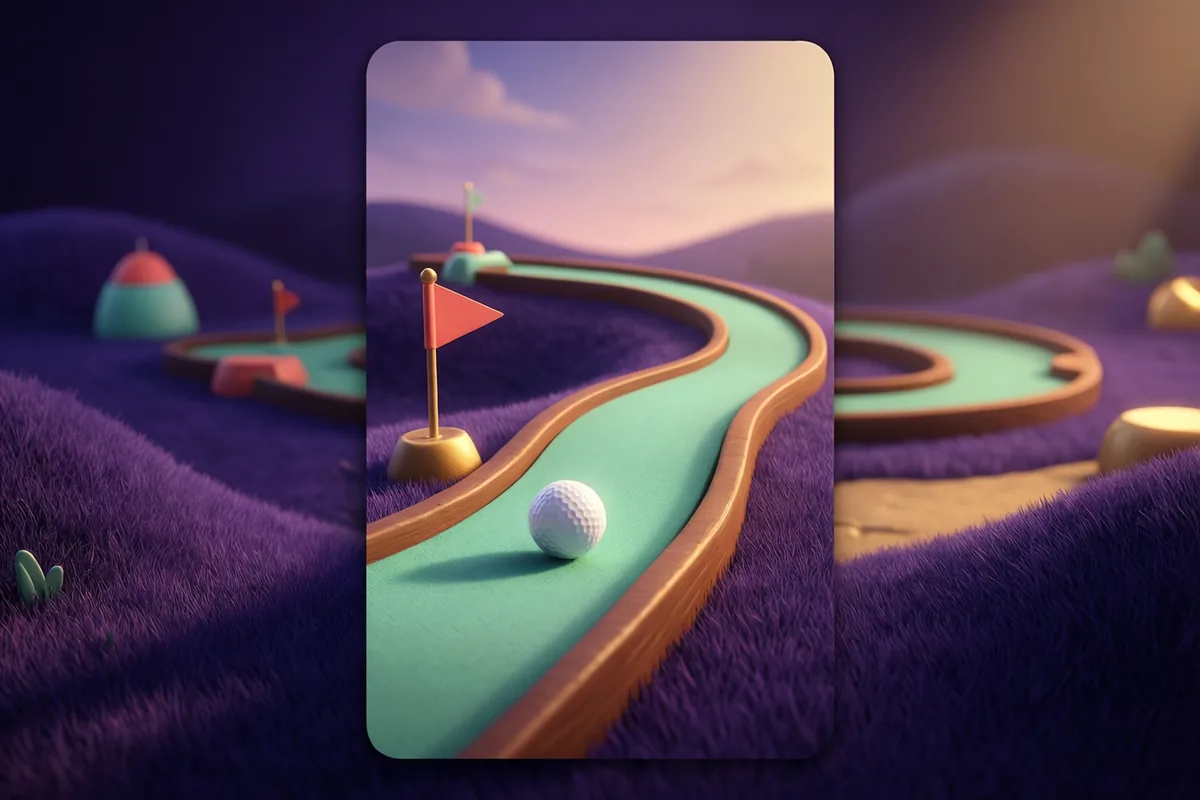
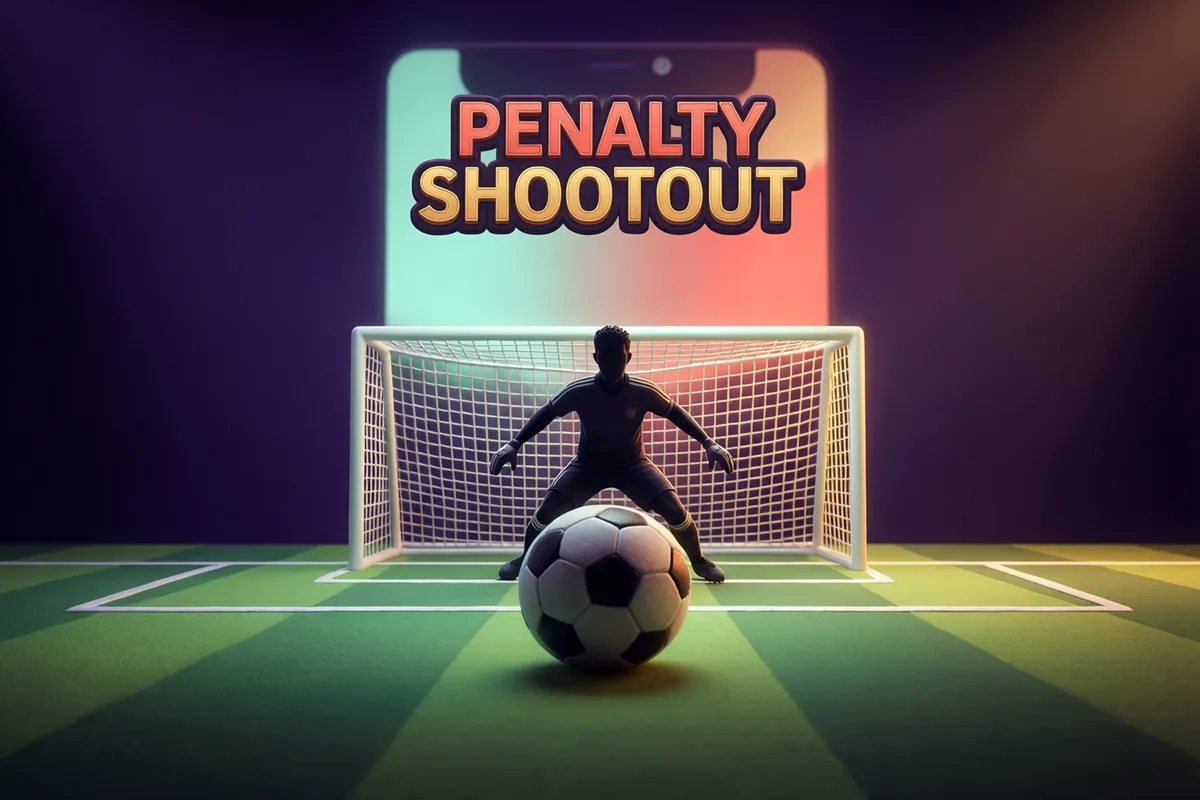
Mini Putt needs a slow enough approach for the ball to drop into the cup. Pop-A-Shot scores on a downward rim crossing. Penalty Shootout separates aiming from timed release, while Air Hockey needs continuous mallet positioning.
Find out what your input controls
Find out whether you are choosing a launch, timing an action, or reacting to something already moving.
| Game | Input | What it sets |
|---|---|---|
| Mini Putt | Drag and release | A launch opposite the drag, with power rising to a cap |
| Pop-A-Shot | Drag and release | An arc toward the hoop |
| Penalty Shootout | Aim, then a second action | The target first, then timing on a moving meter |
| Air Hockey | Mallet position | Where you meet a puck that never stops |
Two of these targets move on their own
Air Hockey never stops the puck, and the Pop-A-Shot hoop starts sliding once your score reaches ten. In those two games your input answers something already in motion, so the same drag will not repeat the same result.
Three of the four use a drag
Mini Putt, Pop-A-Shot and Penalty Shootout all start from a drag or an aim, but each converts it differently. Air Hockey is the odd one out, because there is nothing to set up.
Identify the type before you adjust anything. A power problem and a timing problem need different corrections.
Read the miss before changing the shot
Watch how the ball arrives before you change the angle, because many misses are power problems rather than aim problems.
Mini Putt: the ball must arrive slowly
Rolling across the cup is not enough. A putt on the correct line still fails when it crosses the cup too fast.
Pop-A-Shot: the ball must cross the rim downward
A basket registers as the ball falls through the rim. Reaching rim height while still rising is not a score, however close it looks.
Change one thing at a time
Adjust the power or the line, not both together. Otherwise a better result will not tell you which change helped.
Watch the whole path, not the finish
Follow the ball from release to rest. The part of the path that explains a miss is usually before the target rather than at it.
A close miss and a wrong shot look alike
A ball that rolls over the cup and a ball that stops short both look like near misses. Only the path tells you which one you played.
Judge the approach and the descent. That tells you more than whether the shot looked close.
Allow for the target changing
The Pop-A-Shot hoop begins moving after the score reaches ten, so a release that worked at the beginning may meet a different rim position later. Penalty Shootout uses your earlier aim locations when choosing the keeper’s dive zone; repeating a target is not a promise of the same outcome. In Air Hockey, a long chase can leave your own goal open. Reposition after contact and inspect the puck’s return path before committing to another attack.
Understand what ends the round
Each sport here ends on a different condition: a clock, a fixed set of attempts, a nine-hole card, or goals scored.
| Game | End condition | What it rewards |
|---|---|---|
| Pop-A-Shot | 60 seconds of active play | Quick shot turnover |
| Penalty Shootout | Five kicks | Care on every single attempt |
| Mini Putt | Nine holes, total par 26 | Fewer strokes per hole |
| Air Hockey | Goals scored | Repositioning after every contact |
Match the habit to the format
A sixty-second cabinet rewards taking the next shot quickly. A nine-hole course rewards leaving yourself an easy second putt. Carrying the first habit into the second game costs strokes.
Use the objective shown on the page. One high-score habit does not fit all four formats.
Manage a race separately from a checkpoint run
Stock Car Hero compares your progress with seven rivals and awards coins after the finish for upgrades. Whacky Wheels asks you to pass through marked checkpoint openings before its timer runs out. Both accelerate automatically and provide steering, brake and boost controls. A fast approach is useful only when the next lane is open; slowing briefly to line up a checkpoint can preserve more time than rushing past its opening.
Separate aim from power
Open Mini Putt for a playable example from this collection, then continue with the arcade shooter guide. Browse the arcade sports games collection as more games are added to the public library.
Questions about sports games
Is aiming or timing the harder skill to learn here?
Timing, because aim is something you can see and correct while timing has to be felt. Mini Putt and Pop-A-Shot let you set a direction and a power before releasing, so you can compare two attempts directly. Penalty Shootout puts a moving meter between your aim and the kick, which is why the same intended shot lands in different places.
Why does the same shot give a different result twice in a row?
Because something else in the game moved. The Pop-A-Shot rim starts moving once the score reaches ten, and Penalty Shootout uses your earlier aim spots when choosing the keeper's dive. Check what changed on the target side before deciding your own shot was wrong.
Which sports game rewards patience rather than speed?
Mini Putt. There is no clock on the nine-hole course, so you can line up a drag, watch the roll, and take a short second putt instead of another full-power attempt. Pop-A-Shot runs on a sixty-second timer and rewards the opposite habit, which is fast shot turnover.
Can I get better at these without playing for hours?
Yes, if each attempt tests something. Try three centre-power putts in a row, or five kicks aimed at one side of the goal, and note the result of each. A handful of attempts with a question attached teaches more than a long session where you only watch the score.
These tips refer to the editions in our library. Game controls and behavior can differ elsewhere. Spotted a problem?