Hangman strategy: let the pattern narrow the word.
Use the category and visible letter pattern to choose a new letter. Correct guesses reveal every occurrence; only different wrong letters count toward the six-miss limit. There is no timer.
Begin with the information already visible
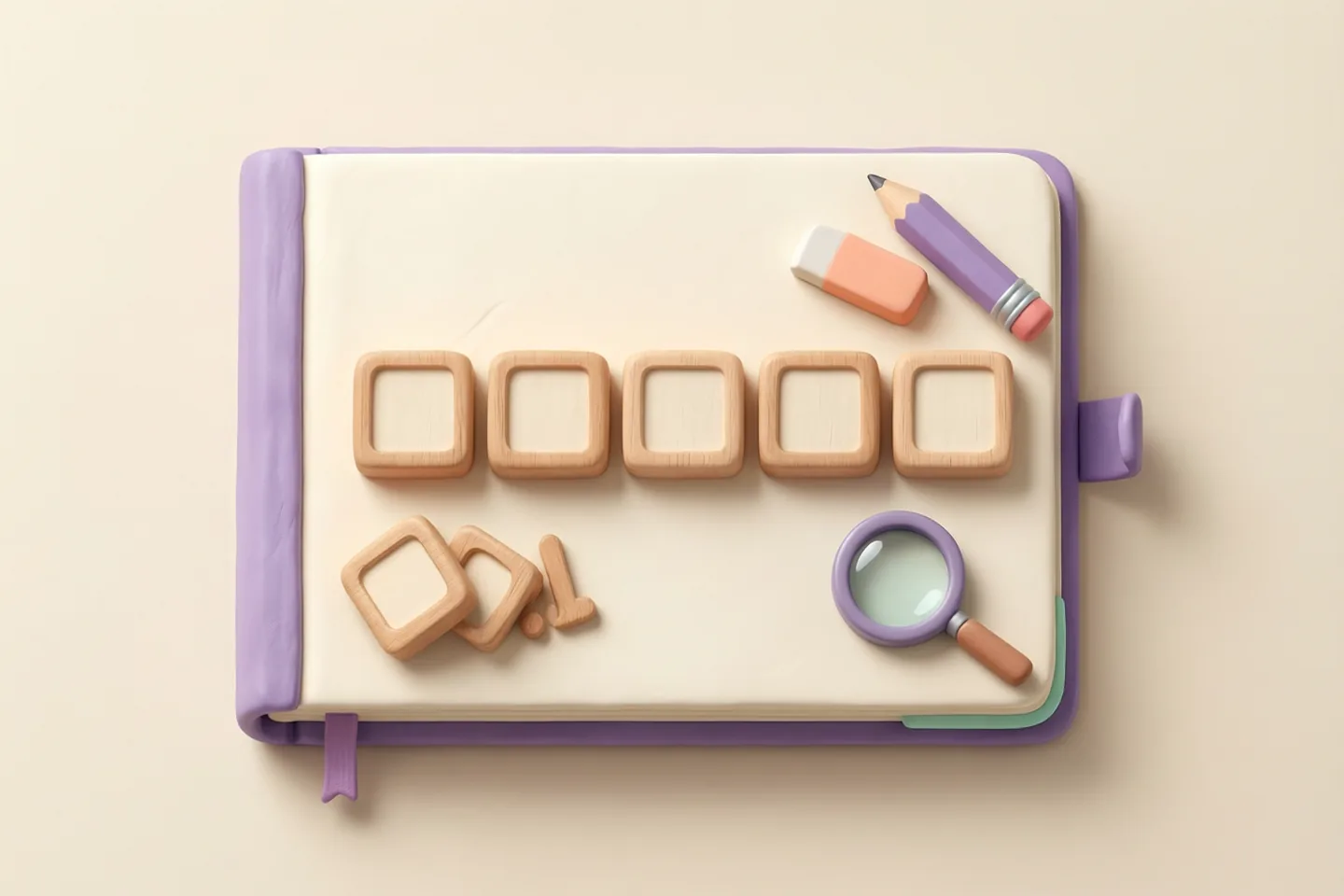
The category and the number of slots are information before you guess a single letter.
| Item | Value |
|---|---|
| Words in the bank | 60 |
| Categories | Nature, Animals, Everyday and Food |
| Wrong guesses allowed | 6 |
Length plus category narrows fast
A four-letter Food word and a four-letter Animals word have very different candidate lists. Use both clues before you spend a guess.
Hold two candidates, not one
Committing to a single word early makes every later guess confirm that word instead of testing it. Keep an alternative in mind so your next letter can separate the two.
Slots are a strong filter
The number of slots is fixed the moment the round starts. Combined with the category, it rules out most of the sixty-word bank before you spend a single guess.
Start with letters that appear often
Vowels and common consonants split a candidate list more evenly than rare letters. A guess that could apply to half your candidates teaches you something whichever way it goes.
Two words can share a length
A seven-letter Nature word and a seven-letter Everyday word look identical on the board. The category label is what tells them apart before any letter appears.
A seven-letter animal and a seven-letter household object suggest different candidate lists. Hold more than one candidate so the first plausible word does not steer every later guess.
Choose a letter that separates candidates
A useful guess can reveal the answer or rule out several candidates. Once letters appear, compare their positions and consider common endings or repeated-letter patterns. Correct guesses reveal every occurrence at once. If a guessed letter does not appear, remove words containing it from your candidate list instead of treating the miss as information about only one position.
Keep the six-miss limit in view
Only different wrong letters count against the six-miss limit, so a repeated guess costs you nothing.
Used letters are locked out
Alphabet buttons become unavailable once used, and the keyboard handler ignores repeats. The A to Z keys and the on-screen buttons do the same thing.
The board shows what is left
Remaining misses are displayed as you play, and the word is revealed when the round ends.
There is no timer
You can stop and reason about the pattern before spending another guess.
Repeats cost nothing but time
A letter you have already tried is ignored, so a slip loses nothing. Only new wrong letters count toward the limit of six.
Six misses is the whole budget
You have six wrong letters for the entire round and no way to earn more. Spend them on guesses that separate candidates rather than on hopeful single letters.
A correct guess reveals every occurrence
A right letter fills all of its slots at once, so a repeated letter costs one guess rather than two.
Wrong letters are still information
A letter that does not appear removes every candidate word containing it. Cross those off rather than treating the miss as a fact about one slot.
Turn the revealed answer into a clue for next time
After a round, compare the answer with its category and the letters you already had, then find the guess that would have separated it from your leading candidate.
Look for the letter you did not try
Usually one unused letter would have split your two best candidates. Finding it is the whole lesson of the round.
New word starts a fresh round
The game avoids repeating the previous answer immediately, so a replay gives you a genuinely different pattern to read.
Keep the pattern, not the answer
What transfers to the next round is the shape you learned to read: common endings, doubled letters, and where vowels tend to sit. The answer itself will not come round again straight away.
The word bank is deliberately finite. This is a compact word game rather than an unlimited dictionary quiz.
Use the pattern before the next guess
Open Concentration for a playable example from this collection, then continue with the puzzle game guide. Browse the puzzle games collection as more games are added to the public library.
Questions about hangman strategy
What is the best first letter to guess?
E. It appears in thirty-six of the sixty words in this word bank, which is more than any other letter, and R and A come next. A correct guess reveals every occurrence at once, so a common letter buys you the most pattern for one attempt.
Does the category actually help?
Yes, more than most players use it. The four categories here are Nature, Animals, Everyday and Food, and each holds fifteen words, so the category cuts the possibilities to a quarter before you guess anything. Combine it with the number of slots, which run from five to nine letters.
Can I guess the whole word instead of a letter?
No. This edition takes single letters only, from the on-screen keyboard or your own, so a word you are sure of still has to be spelled out one letter at a time. That costs nothing when you are right, since only different wrong letters count against the six-miss limit.
Do the same words come back?
The word bank holds sixty words, so words do repeat over a long session, though the game never gives you the same word twice in a row. Recognising a word you have seen before is fair play. It is also why noting the answer at the end of a round is worth doing.
These tips refer to the editions in our library. Game controls and behavior can differ elsewhere. Spotted a problem?