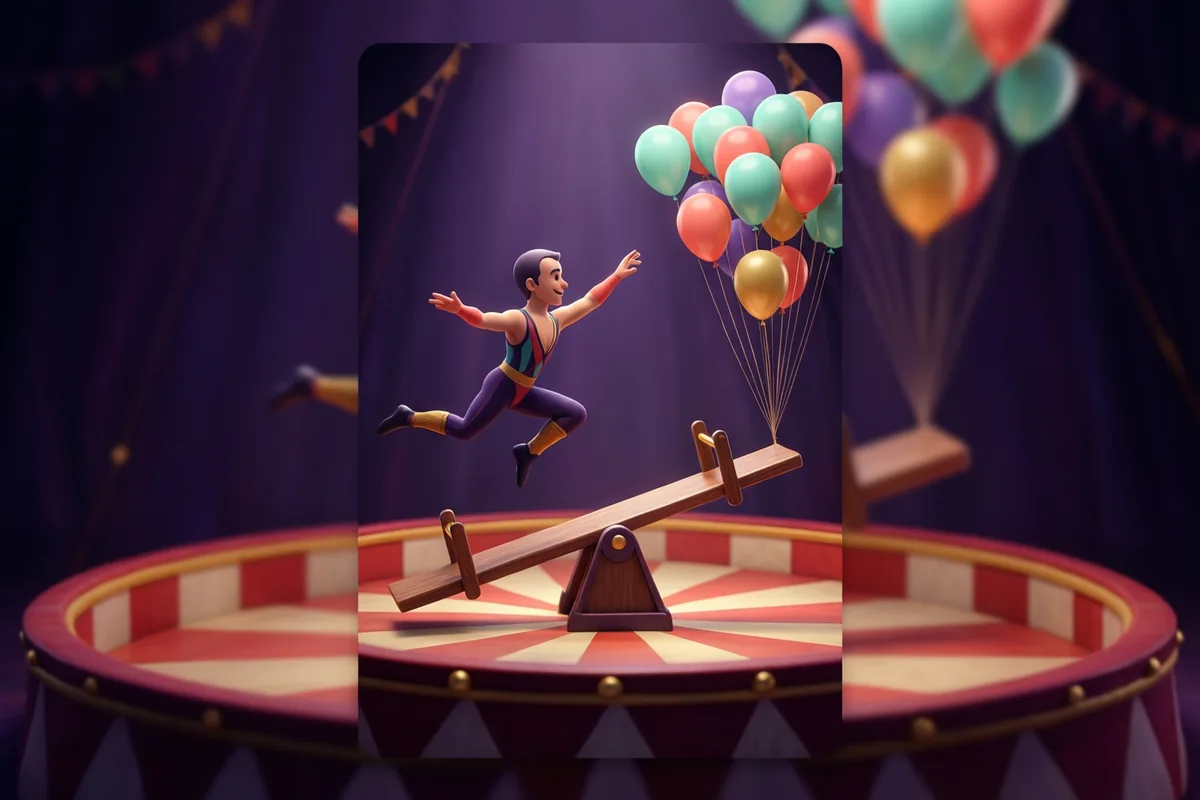
Circus AtariClassics·Free to play
 Free-Games.toSign inSurprise me
Play through three balls, complete bumper, target-bank and orbit objectives, then collect the saucer jackpot.
Sign in to save your scores and play history, or keep playing as a guest. Recent game activity and scores appear on the homepage with a masked email or IP address.
 Pinball
Hold Space or the Launch button, then release. The golden middle rollover lane is a skill-shot target: make it your first lane within eight seconds of launch for 1,500 base points. You can collect this award once per ball.
Hold the left and right arrows separately, or use A and D. Z or X raises both. On a phone, hold the Flip buttons or the two sides of the table with separate fingers; releasing one finger leaves the other flipper held.
Hit each of the three pop bumpers, clear a complete yellow target bank and cross the right spinner orbit three times. The progress panel shows what remains. Completed objectives survive a drain.
When all three objectives are complete, shoot the glowing saucer at the upper left. The first jackpot pays 3,000 base points; each later one adds 1,000 to that base award. Collecting resets the objectives and starts 15 seconds of double scoring. A real drain ends the frenzy.
Light all three rollover lanes for a 2× scoring multiplier for that ball. Flipper presses rotate the lit lanes. Different shot types within four seconds build a combo, up to five steps; repeat hits of the same type do not keep the window open. The frenzy stacks with the lane multiplier.
A drain in the four-second launch-save window triggers one automatic relaunch. After that, center and side drains cost a ball. Nudge can alter the ball’s path, but three rapid nudges tilt the table, disabling flippers, scoring and the save until the next ball.
This is our browser edition, adapted from ARCADENOW. Its artwork, tuning and controls may differ from other games with similar rules. Guest personal bests stay in this browser. Signed-in players can also save scores and play history to their private dashboard; there is no global leaderboard. Read about controls and local storage.
For a change of pace, Circus Atari belongs to the same collection and rewards a different habit than the one you have been practising here. Come back to this page afterwards and the timing you were struggling with often reads more clearly.
Pinball puts a silver ball on a slanted table and dares you to keep it there. Two flippers are your whole arsenal against gravity, and everything above them is a scoring playground: three pop bumpers that slap the ball around and shower you with points, slingshots that kick it sideways when you least expect it, a bank of yellow drop targets on the left wall, a spinner in the right orbit that pays for every revolution, and a glowing kickout saucer that swallows the ball, banks a jackpot, and spits it back. Roll all three lanes across the top and the table doubles your scoring with a x2 multiplier - The moment every good run is built around. You get three balls, a short ball-saver after each launch, and a nudge that rescues drains right up until the tilt bob decides you pushed once too often. The drain between the flippers is always hungrier than it looks, and now the outlanes on either side are hungry too. Our version recreates the classic electromechanical feel in your browser with responsive key and tap-the-sides touch controls, a physics ball with genuine opinions, a saved personal best, and a plunger that sends the ball somewhere slightly different on every launch.
| Genre | Arcade Classics |
|---|---|
| Challenge | Ten seconds to learn, a lifetime to nudge |
| Pace | You set it - Until the ball disagrees |
| Original era | 1947 (first flippers) |
| Players | Single player |
| Controls | ← → / A D, Z / X, Hold Space / Launch, then release, ↑ / W / Nudge, Touch sides or hold Flip buttons |
| Cost | Free, with no account and no download |
Pinball's ancestors are the 1930s pin games - Countertop boards where a plunger fired balls into a field of pins and scoring pockets. David Gottlieb's Baffle Ball (1931) and Bally founder Raymond Moloney's Ballyhoo (1932) sold in the hundreds of thousands during the Depression, a penny a play. But the player mostly watched: once launched, the ball's fate was gravity, pins, and a hopeful nudge - Which is why several American cities banned pinball as a game of chance.
Everything changed in 1947, when Gottlieb released Humpty Dumpty, designed by Harry Mabs. It carried six player-controlled flippers, and for the first time skill could genuinely fight gravity. The industry converged on the familiar two-flippers-at-the-bottom layout within a few years, and decades of electromechanical machines followed - Chimes, score reels, pop bumpers, slingshots, drop targets and spinners. In the late 1970s solid-state electronics replaced relays with circuit boards, adding digital displays, sound, and deeper rules, and the modern pinball machine was complete.
Real tables never stopped being built - And pinball found a second life on screens, where simulated physics finally got good enough to feel honest. The version you are playing distills the classic single-level table into the browser: two flippers, three pop bumpers, slingshots, three rollover lanes with lane-change, a drop-target bank, a spinner orbit, a kickout saucer, a nudge with a working tilt bob and a x2 multiplier, with a saved personal best standing in for the initials on the backglass.
Three per game. A ball ends when it falls through the drain between the flippers or slips down an outlane, and your total across all three is your final score. Each launch also carries a few seconds of ball-save that returns an instant drain.
Roll the ball through all three rollover lanes at the top of the table to light the full set. Once lit, the table doubles the points from everything you hit. Flipper presses rotate which lanes are lit, so you can steer the last light under the ball.
The three yellow targets on the left wall pay 150 points each and drop when hit. Clearing the whole bank banks a 1,000-point bonus and the targets pop back up for another sweep.
The spinner is the pink bar across the right orbit - Shoot through it and it pays per revolution, spinning longer the harder you hit it. The glowing saucer on the upper left swallows the ball, awards 500 points, and kicks it back into play.
Press ↑ to nudge the table and rescue a dying ball. Nudge too often in a short window and the tilt bob triggers: your flippers go dead and scoring stops until that ball drains. Real machines have punished impatient players this way since the 1930s.
The triangular kickers just above each flipper. They punch the ball away when it touches their rubber edge, which saves some balls and flings others straight toward the outlanes.
You can genuinely aim. Where the ball sits on the flipper and when you flip decide the shot line - Top players trap the ball, pick a target, and hit it on purpose.
Gottlieb's 1947 game Humpty Dumpty, designed by Harry Mabs, was the first pinball machine with player-controlled flippers - Before that, pinball was mostly luck and nudging.
No. The table layout never changes, but the ball's path off the bumpers and slingshots differs every launch, which is why nudging and lane changes matter more than memory.
Tap and hold the left or right side of the screen to work each flipper, just like the buttons on a real cabinet, and hold the launch button to charge the plunger before letting the ball fly.
Four games from the same shelf, each with its own pace. The one-line summaries are how their own pages describe them.
| Game | What it is like | Pace | Play |
|---|---|---|---|
| Circus Atari | Trampoline an acrobat through rows of balloons. | Every bounce raises the stakes | Play |
| Mini Putt | Nine holes, cruel walls, one smug windmill. | Your pace - Par is the enemy | Play |
Read the different clocks in Snake, Breakout, Pong and Tetris: grid steps, collisions and falling pieces.
Shortcuts