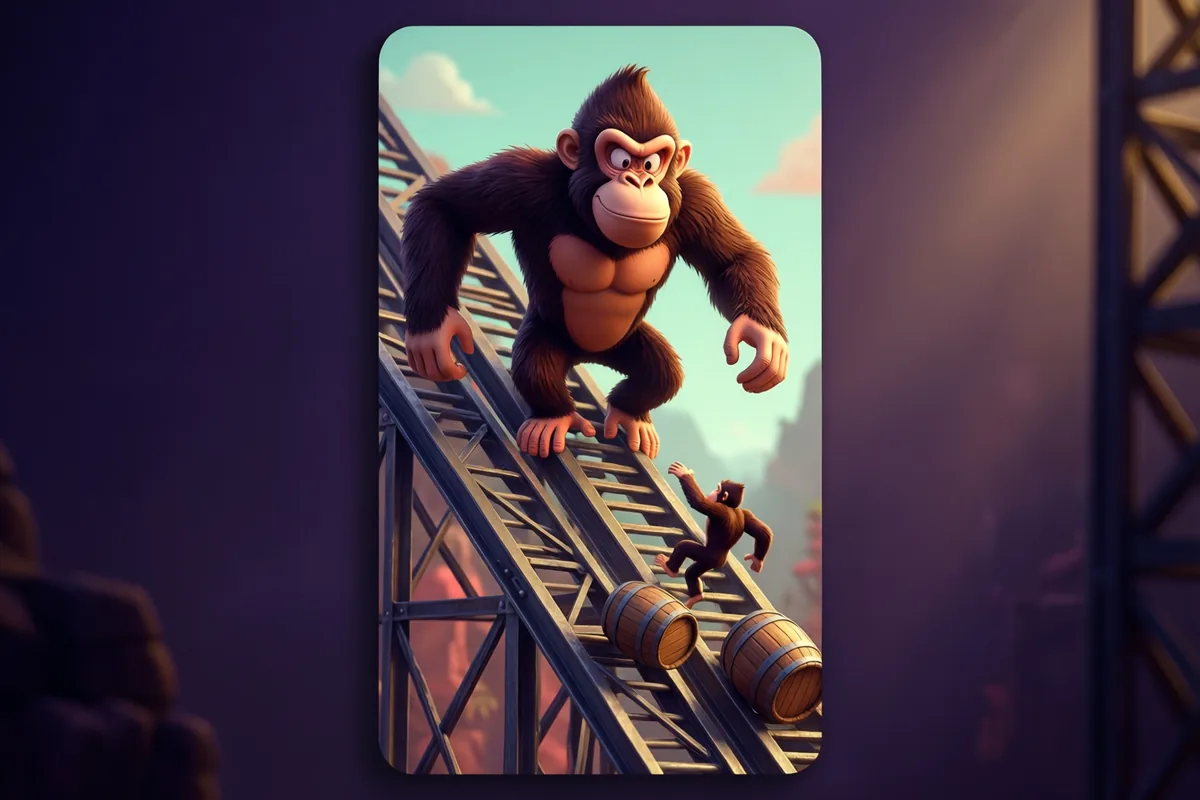
Donkey KongClassics·Free to play
 Free-Games.toSign inSurprise me
Fall through moving platform gaps and stay clear of the spiked ceiling above.
Independent browser adaptation · Not an official releaseSign in to save your scores and play history, or keep playing as a guest. Recent game activity and scores appear on the homepage with a masked email or IP address.
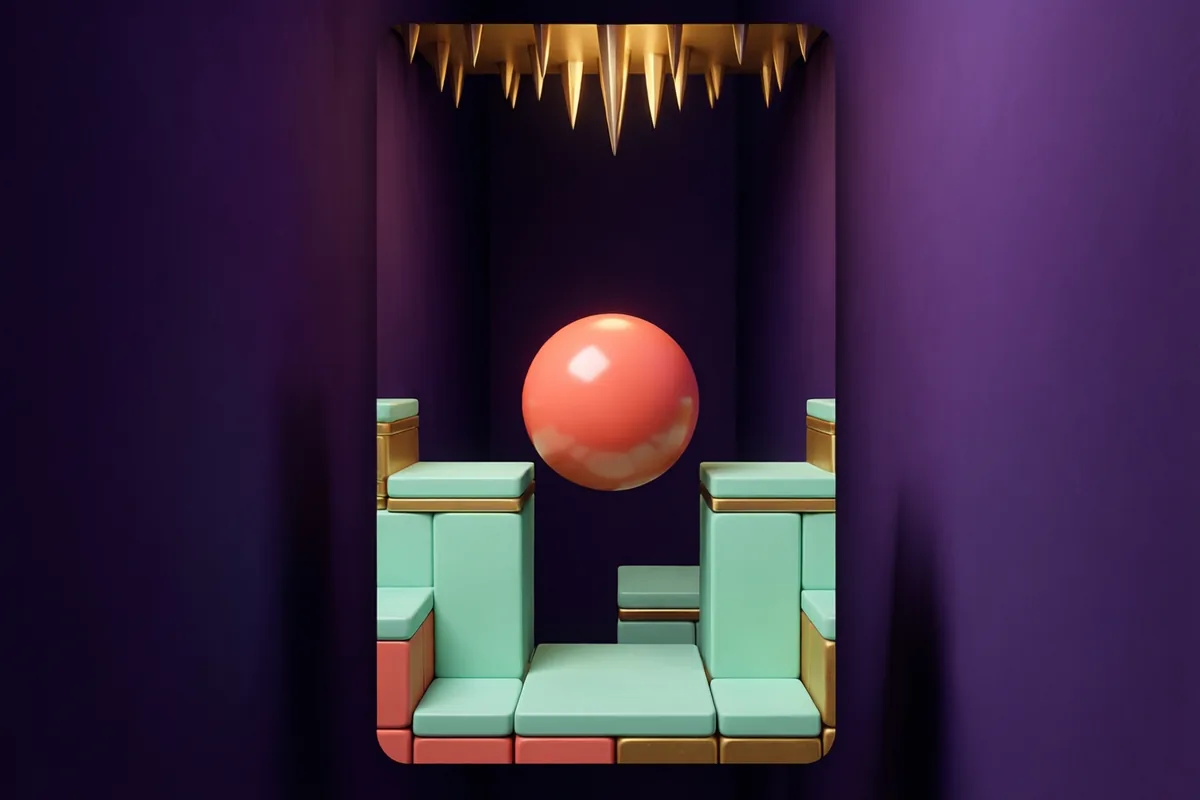 Fall Down
Use the left and right arrows, A and D, or a drag on the screen to roll the ball sideways. There is no jump button - Gravity handles the vertical, you handle the horizontal.
Every rising platform has a gap. Line the ball up and drop through to the platform below - Each successful drop feeds your score.
The spiked ceiling at the top of the screen is instant death. Any time you ride a platform upward, you are on a timer to find the next gap.
Gaps are generated so the next one is always reachable from where you land. If you feel trapped, the escape exists - Look wider and commit harder.
At set score milestones the platforms rise faster. Each tier shrinks the pause between drops, until reading two gaps ahead is the only way to keep up.
This independent browser adaptation uses the original game’s established title. It is not an official publisher release or an original ROM. Its artwork, tuning and controls may differ from other games with similar rules. Guest personal bests stay in this browser. Signed-in players can also save scores and play history to their private dashboard; there is no global leaderboard. Read about controls and local storage.
Falling through the nearest gap can still leave you badly placed for the next one. Doodle Jump asks the same landing question while climbing from platform to platform.
Fall Down flips the platformer on its head: falling is the goal, and the floor is the enemy. Platforms rise steadily from the bottom of the screen, each one pierced by a gap, and your job is to steer a rolling ball into gap after gap so gravity can keep doing the real work. Stand still too long and the rising platforms carry you up into a spiked ceiling that does not negotiate. Every gap is guaranteed reachable - The game never deals an impossible layout - So every death is a routing mistake, which is exactly what makes one more attempt so hard to refuse. Speed tiers kick in as your score climbs, raising the platforms faster and shrinking your thinking time. Our version adds smooth keyboard and drag controls, a score that rewards clean consecutive drops, and a fresh stack of platforms every time you restart, so no descent is ever a repeat of the last.
| Genre | Running Games |
|---|---|
| Challenge | Gravity is your only friend |
| Pace | Platforms rise faster and faster |
| Original era | 1999 (Fall Down era) |
| Players | Single player |
| Controls | ← → / A D, Drag (mobile) |
| Cost | Free, with no account and no download |
Fall Down was born where teachers least wanted it: on TI graphing calculators in 1990s classrooms. The game - A ball, rising lines, gaps to fall through - Was tiny enough to fit in a calculator's memory and good enough to travel from student to student over link cables, becoming one of the signature titles of the calculator gaming scene that grew up around sites like ticalc.org.
The idea proved wonderfully portable. Flash portals of the early 2000s hosted countless Falldown remakes, and Japan's NS-Shaft - Nagi-P Soft's 1997 descend-the-tower classic - Pushed the same descend-or-die tension in its own direction. The formula's genius is its inversion: where most arcade games fight gravity, the falling genre makes gravity the engine and turns the humble floor into the villain.
Descendants kept arriving - Most famously Downwell in 2015, which wrapped a roguelike shooter around the joy of falling - But the original remains a perfect browser game: one ball, two directions, instant restarts. Fall Down keeps that purity and adds guaranteed-reachable gaps, speed tiers, a freshly built stack every attempt and a saved personal best.
Keep falling. Every platform you drop through adds to your score, and the run ends when the rising platforms push the ball into the spiked ceiling.
Because the game is built entirely on gravity. Removing the jump turns every floor into a pure routing problem: find the gap, get there, fall. Simplicity is the difficulty.
No. Gap placement is constrained so the next gap is always reachable from your landing spot at your current speed tier. If you died, a route existed - Which is the fun and the pain of it.
Score milestones where the platforms start rising noticeably faster. They arrive in steps rather than a smooth ramp, so you can feel each new gear click in and adjust.
Primarily by platforms passed, so consistent falling beats lucky streaks. Surviving into the higher speed tiers is where a personal best is made.
From Fall Down, a 1990s classic that lived on TI graphing calculators and later Flash portals. Fall Down is our tribute to that falling-through-gaps lineage, with modern polish.
No. Each descent builds a new stack with new gap positions, though every gap is still guaranteed reachable. Routing skill carries over; a memorised line does not.
Drag anywhere on the screen and the ball follows your finger's horizontal motion - The same control as the arrow keys, with the bonus of analog precision.
Four games from the same shelf, each with its own pace. The one-line summaries are how their own pages describe them.
| Game | What it is like | Pace | Play |
|---|---|---|---|
| Donkey Kong | Six girders up, a hundred barrels down. | Rhythmic climbing under bombardment | Play |
| Doodle Jump | Bounce forever - The ground is a memory. | Platforms thin out as you rise | Play |
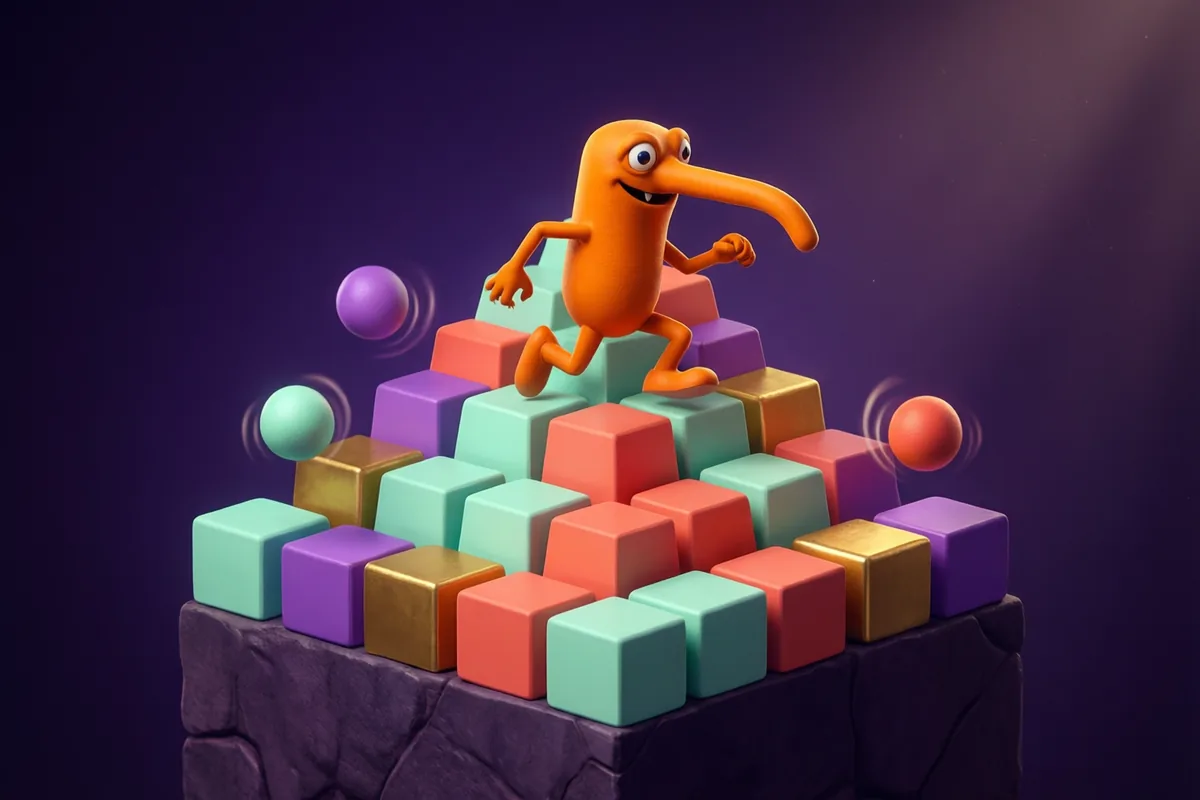
| Q*bert | Hop every cube, swap every color, dodge the bouncing menace. | More hunters on every pyramid | Play |
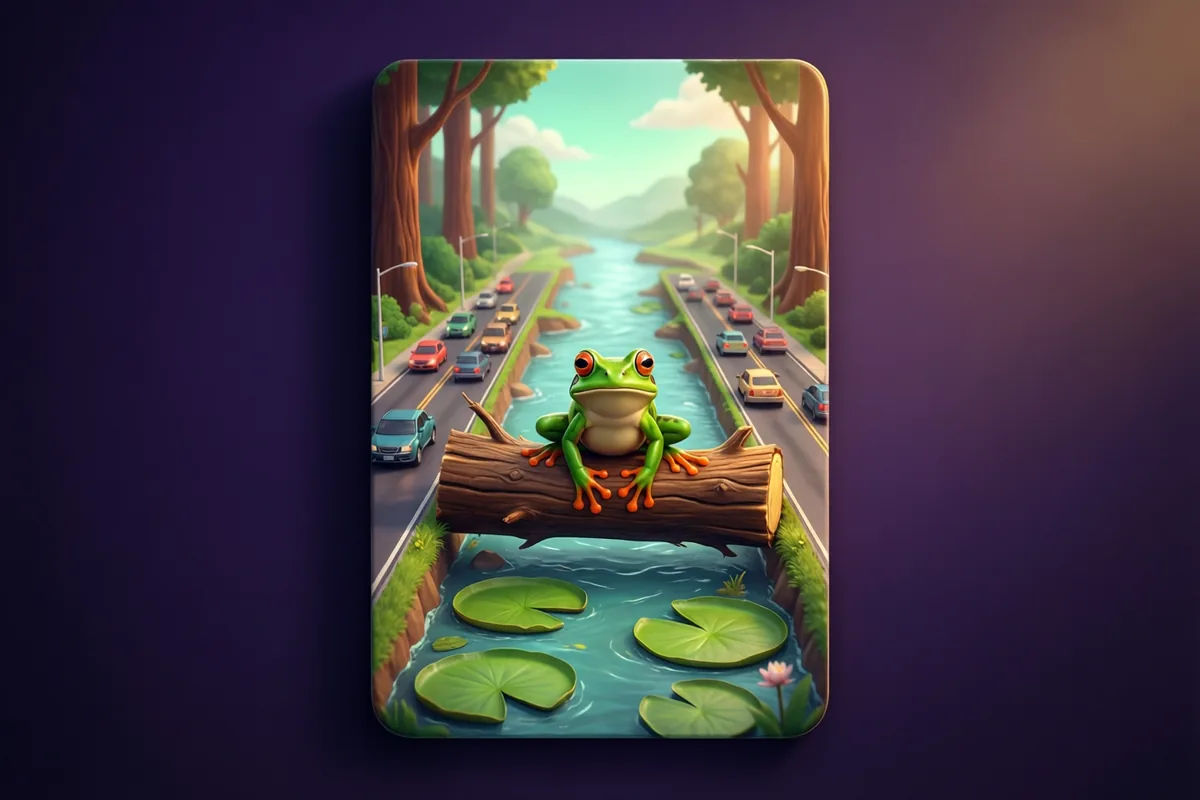
| Frogger | Five lanes of traffic, one very brave frog. | Turn-by-turn hops against real-time traffic | Play |
A jump, a flap, a lane change and a corner tap solve four different movement problems.
Shortcuts