TetrisClassics·Free to play
 Free-Games.toSign inSurprise me
Fill each row, column and 3 × 3 box with the digits 1–9.
Sign in to save your scores and play history, or keep playing as a guest. Recent game activity and scores appear on the homepage with a masked email or IP address.
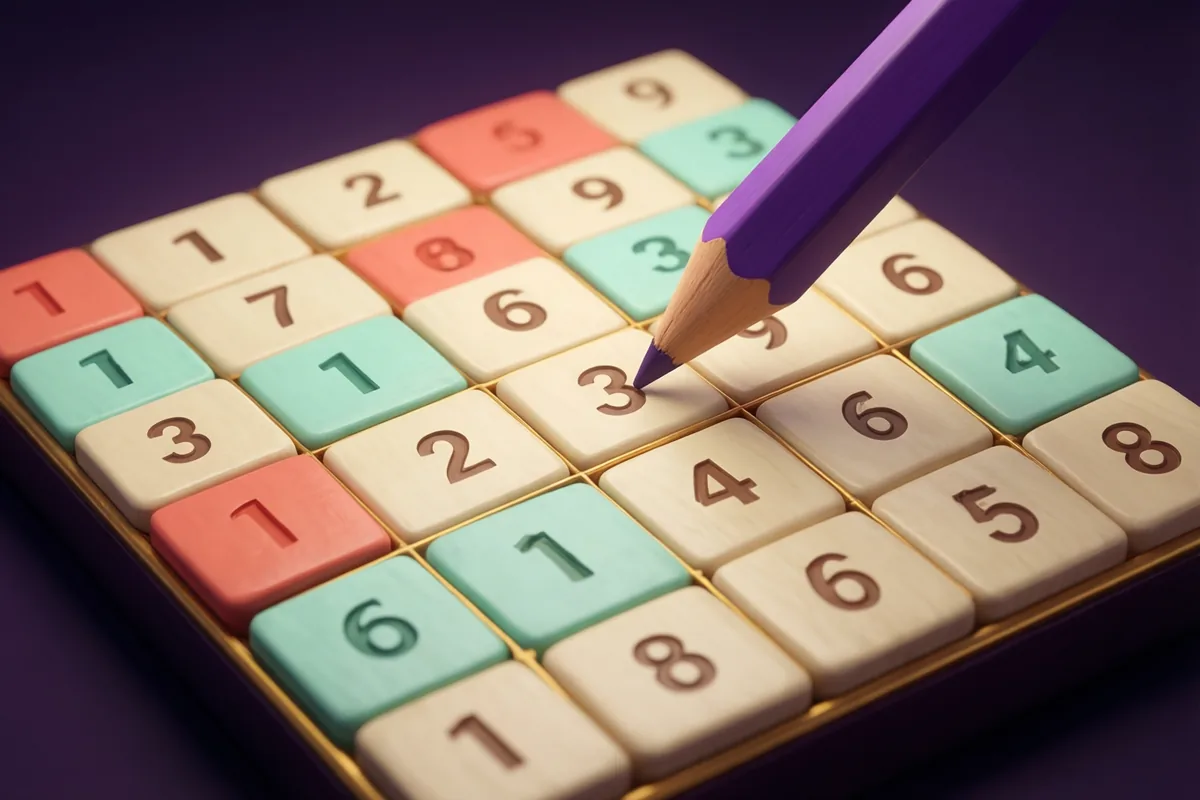 Sudoku
Pick Easy, Medium, Hard or Expert, then select an empty cell and enter a digit using the keypad or keyboard. The selected row, column and box are shaded, matching digits light up, and the keypad counts how many of each digit remain.
Each digit appears once in its row, column and 3 × 3 box. The timer runs while you play and your best time for each level is kept in this browser.
Switch on Notes to record possibilities; a placed digit clears itself from neighbouring notes. Check highlights conflicts without filling the solution, Hint fills the selected cell, and Undo takes back the last entry.
This Sudoku game is built for Free Games. Read about controls and local storage.
If this run is not going your way, Lights Out is close by in the same collection and tests a separate skill. Alternating between two games in one collection keeps a session interesting without asking you to learn a whole new set of controls.
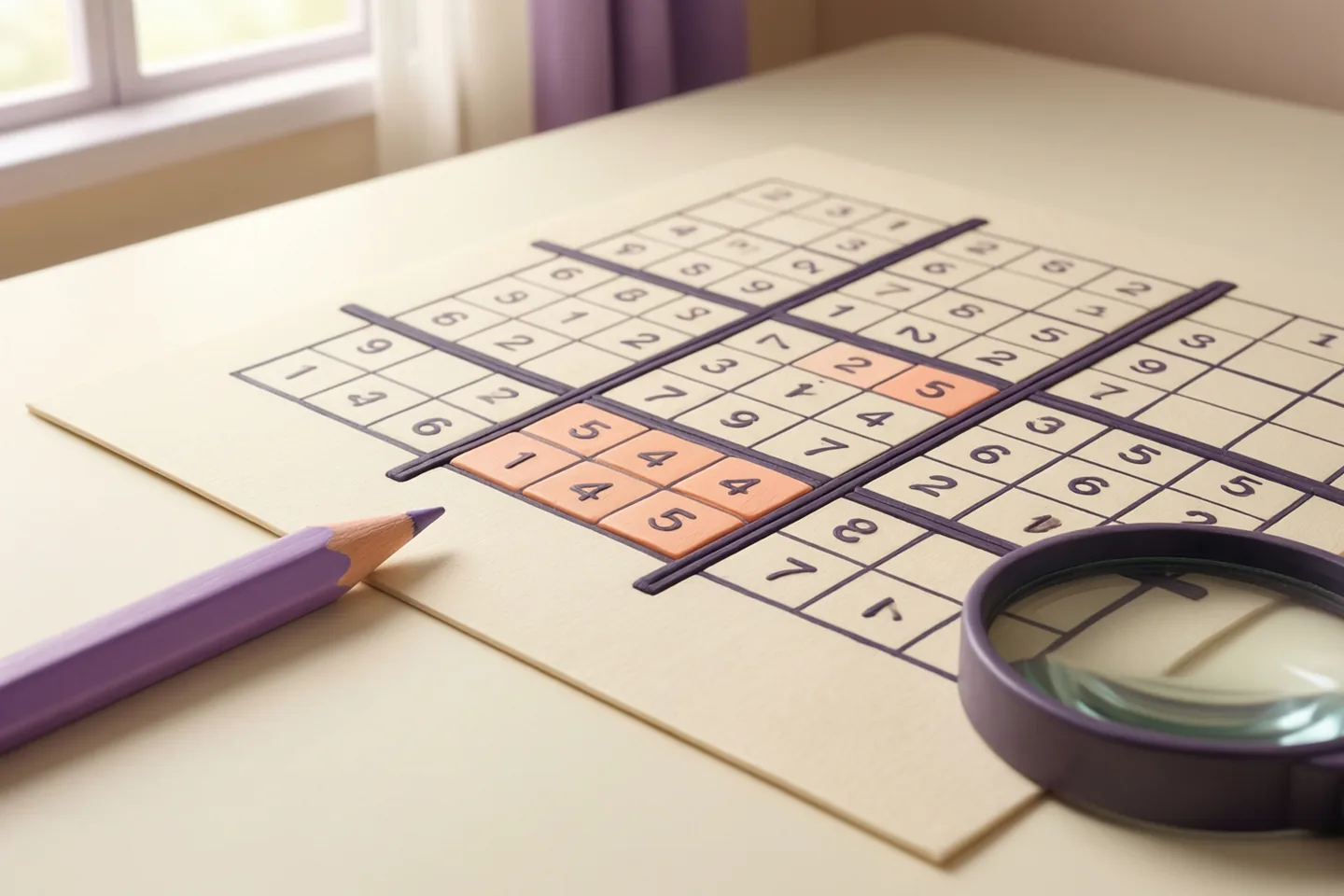
Sudoku is a quiet game of elimination. You get a 9 by 9 grid split into nine boxes of nine cells, and a handful of starting digits called clues. Your job is to fill every empty cell so that the digits 1 to 9 each appear once in every row, once in every column and once in every 3 by 3 box. The digits are only labels, and you could play the same puzzle with nine colours.
This edition builds a fresh grid every time you press New puzzle. Easy leaves 43 clues, Medium leaves 35 and Hard leaves 29, and each board is tested while it is being carved out so that exactly one solution survives. That matters more than it sounds. Because the answer is unique, every cell can be reasoned out, and a guess is never required. If you are new to that kind of reasoning, the Sudoku beginner guide walks through the first two techniques.
Tap a cell and type a digit, or use the on-screen keypad. Notes mode lets you park several candidates in one cell while you think. Check marks any conflicts you have created without revealing the answer. Starting clues are locked, so you can never damage the puzzle. Players who like this sort of careful narrowing usually also like Minesweeper.
| Genre | Puzzle Games |
|---|---|
| Challenge | Logic only, never guesswork |
| Pace | As slow as you like, no timer pressure |
| Original era | 1979, as Number Place in New York |
| Players | Single player |
| Controls | Tap a cell, 1–9 / keypad, Erase, Hint / H, Undo / Ctrl+Z |
| Cost | Free, with no account and no download |
The modern puzzle was invented by Howard Garns, a retired architect from Indiana. Dell Magazines printed it in 1979 under the name Number Place, and Garns was never credited by name in his lifetime. Latin squares, the mathematical idea underneath it, are far older and were studied by Leonhard Euler in the eighteenth century, but Euler never added the 3 by 3 box rule that gives Sudoku its character.
The puzzle travelled to Japan in 1984, where the publisher Nikoli ran it as Suji wa dokushin ni kagiru, meaning roughly "the digits must be single". The name was shortened to Sudoku. Nikoli also added two house rules that stuck: no more than 32 clues, and symmetrical clue patterns.
The worldwide boom came in late 2004, when a New Zealander named Wayne Gould persuaded The Times of London to print puzzles from a program he had written. Within a year Sudoku was in newspapers everywhere, and it has stayed there since. You can find more puzzles of that thinking sort in the puzzle games guide.
No. You never add, subtract or count anything. The digits 1 to 9 are simply nine distinct symbols, and the whole puzzle is about where each symbol can and cannot go. Swap them for nine animals and the puzzle plays identically.
Not on this site. Every puzzle is generated by removing clues one at a time and putting a clue back whenever the grid stops having exactly one solution. A single solution means every cell can be deduced. If you feel stuck, you have missed something rather than met a fork.
The number of starting clues. Easy grids keep 43 filled cells, Medium keeps 35 and Hard keeps 29. Fewer clues mean you have to chain more steps together before a cell is forced, so hard boards take longer rather than demanding secret techniques.
It writes small candidate digits into a cell instead of an answer. Tap Notes, then tap digits to add or remove them from the selected cell. Entering a real answer clears that cell's notes. Notes are your own working and are never checked against the solution.
No. Check only highlights digits that conflict with another digit you can already see, in the same row, column or box. A cell that is simply wrong in a way nothing contradicts yet will not be flagged.
Yes. Tap a cell to select it, then tap a digit on the keypad below the grid. The Erase key clears your entry. No app, no account and no download is needed.
Scan by digit rather than by cell. Pick one number, look at where it already sits, and see which boxes have only one row or column left for it. Most beginners scan cell by cell, which is far slower.
Four games from the same shelf, each with its own pace. The one-line summaries are how their own pages describe them.
| Game | What it is like | Pace | Play |
|---|---|---|---|
| Tetris | Seven falling shapes, one goal: clear the line. | Levels raise the drop speed | Play |
| Minesweeper | Reveal the safe squares and flag the hidden mines. | Bursts of thought, then quick clearing | Play |
| Lights Out | Switch off every light on the five-by-five board by toggling cells and their neighbors. | Two to ten minutes per board | Play |
Rows, columns, boxes and the first two deductions worth learning.
Shortcuts